
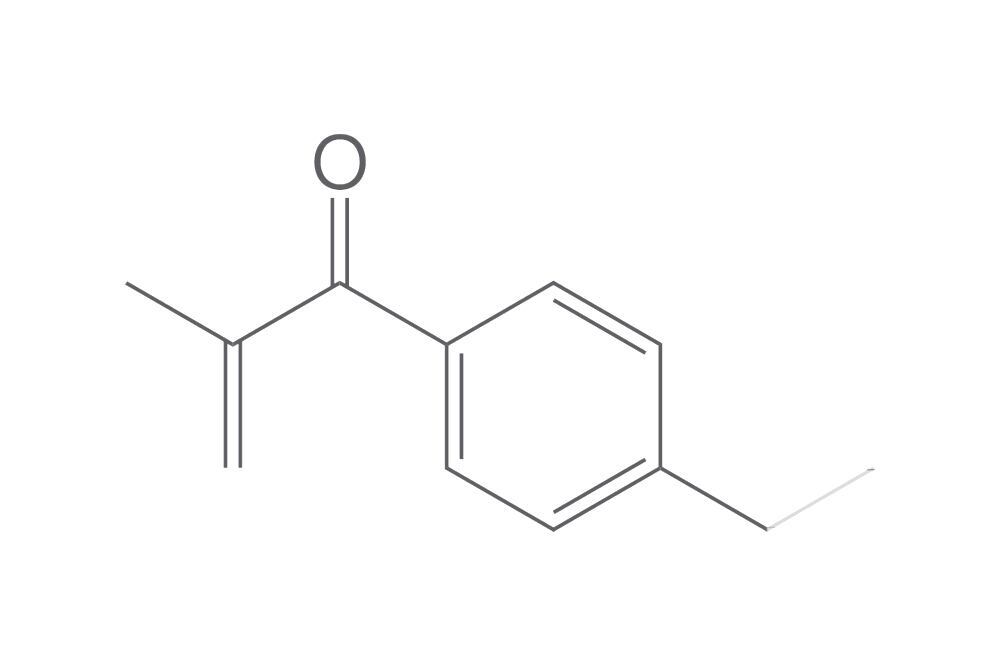


Description
1-(4-Ethylphenyl)-2-methyl-2-propen-1-one is an aromatic enone intermediate for organic synthesis and biochemical research applications. The compound is identified by CAS number 70639-76-8, has the empirical formula C₁₂H₁₄O and a molar mass of 174,24 g/mol. A density of 1 g/cm³ is reported, aiding volume and mass conversions during solution preparation. This listing provides, well suited to method scouting, small-scale coupling or condensation chemistry, and preparation of analytical reference solutions. Sourced from manufacturer Carl ROTH, the material supports laboratories that require a defined ethylphenyl-substituted propenone scaffold with transparent identity data. The combination of CAS registration, molecular formula and molar mass enables accurate stoichiometric planning and documentation in electronic lab notebooks. Researchers working on fine-chemical routes, structure optimisation or specialty monomer studies can draw on the stated physical parameters without introducing unsupported performance claims. quantity balances economy with sufficient material for repeated micro-scale trials and spectroscopic verification.
Key features
- Purity (HPLC): ≥ 95 %
- Colour: colorless to light yellow
- Form: liquid
- ¹H-NMR Spectrum: corresponds to assigned structure
- CAS number: 70639-76-8
- Pack sizes: 100 mg, 250 mg, 500 mg
- Empirical formula: C₁₂H₁₄O
- Molar mass: 174,24 g/mol
- Density: 1 g/cm³
- Chemical class: aromatic enone
- Technical Information Sheet:

- Safety Data Sheet:
Compliance & Safety Information
 Warning
Hazard Statements (H-Phrases)
Recently viewed
You may also like
Browse related categories
Category
Sub-category
Catalogue
Brand
Questions about 1-(4-Ethylphenyl)-2-methyl-2-propen-1-on, e, 100 mg
What is this article?
1-(4-Ethylphenyl)-2-methyl-2-propen-1-on, e, 100 mg is the article on this page. Luminix Health distributes Carl Roth for laboratory use. It sits in Markers & pens, inside Labels, signs & marking, in Lab safety equipment.
A laboratory marker is specified by the surface and the conditions it still reads after: frozen tubes, autoclaved labels, a solvent-splashed bottle. An ordinary whiteboard pen is not that marker. Permanent on paper and permanent on a cold polypropylene tube are different claims.
A label is how the next person knows what is in the bottle. A GHS label carries the pictogram, the signal word and the hazard statements the classification requires. A tape or a marker is only as useful as its survival in the freezer, the autoclave or the solvent it will meet. A safety sign is the instruction that stays on the door. The pictograms come from the CLP Regulation and are explained by ECHA CLP. Workplace signs sit with EU-OSHA.
Which category should I open next?
The category is Labels, signs & marking. The sub-category is Markers & pens. The catalogue is Lab safety equipment.
Shelves beside this one are Labelling & marking tape, Laboratory labels, GHS & hazard labels, Safety signs & pictograms and Labels & marking (other).
What should I check before I order?
When this page shows a safety data sheet, use that manufacturer file. Hazard text does not belong in the sales description. For a pack size, a grade or a certificate that is not on the page, send a quote request or contact the team.
How does ordering and shipping work?
Luminix Health distributes this article from the heart of Europe. Articles in stock ship within 2–5 business days. Standard delivery is free from €250 excl. VAT. Cold-chain goods and dangerous goods under ADR are never included in that free delivery. The terms are in the Shipping Policy. The full brand index is on shop by brand. Who we are is on about us.
Which other categories should I open?
The seven catalogues are Labware, Lab chemicals, Lab instruments, Lab consumables, Chromatography equipment, Lab safety equipment and Life Science & Microbiology.