


Description
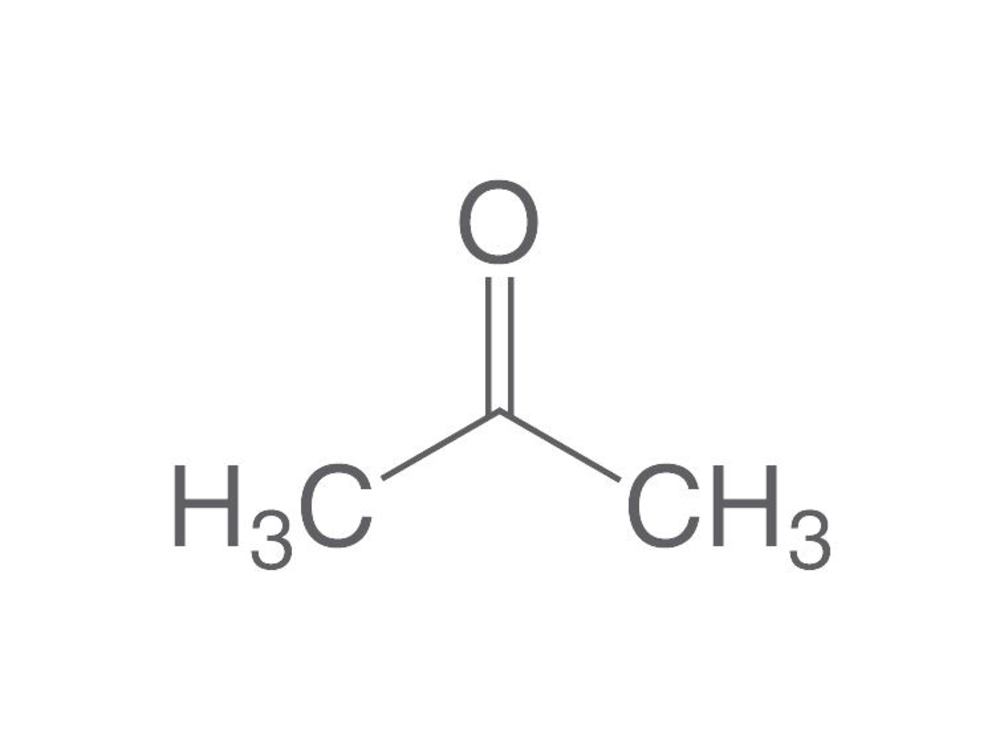
Acetone is an organic solvent specified for 3D printing applications. With CAS number 67-64-1, empirical formula C₃H₆O and a molar mass of 58,08 g/mol, it shows a density of 0,79 g/cm³, a boiling point of 56,05 °C and a flash point of −17 °C. These physical properties make it suitable for cleaning, surface finishing and residue-removal steps in conventional 3D printing workflows. The solvent is EG number 200-662-2 further identifies this well-characterised ketone. Users select acetone from manufacturer Carl ROTH when a dedicated 3D-printing grade is required for post-processing or equipment maintenance. Its low boiling point supports rapid evaporation after application, while the defined density aids process consistency across batches. Observe flammability controls, grounded transfer and adequate ventilation whenever the solvent is dispensed or stored.
This article belongs on 3D printers, accessories & spare parts, in 3D printing & bioprinting.
Key features
- CAS number: 67-64-1
- Pack sizes: 1 l, 5 l
- EG nr.: 200-662-2
- Molar mass: 58,08 g/mol
- Density: 0,79 g/cm³
- Technical Information Sheet:

- Safety Data Sheet:
Compliance & Safety Information
 Danger
Hazard Statements (H-Phrases)
Precautionary Statements (P-Phrases)
Recently viewed
You may also like
Browse related categories
Category
Sub-category
3D printers, accessories & spare parts
Catalogue
Brand
Questions about Acetone, for 3D printing, 1 l, plastic
What is this article?
Acetone, for 3D printing, 1 l, plastic is the article on this page. Luminix Health distributes Carl Roth for laboratory use. It sits in 3D printers, accessories & spare parts, inside 3D printing & bioprinting, in Lab instruments.
These are the printers themselves and the nozzles, beds and build plates that wear out. Nozzle diameter decides detail against speed. A spare nozzle for a different extruder thread does not fit. The printer's build volume is the largest object it can make.
A laboratory 3D printer builds a solid from a filament or a resin, layer by layer, when a shape is needed and a catalogue part does not exist. Bioprinting uses a bioink that contains, or will contain, living cells. The material decides the chemistry of the object and whether a cell will tolerate it. A filament that is only described as plastic is not a specification. Cell work around bioinks is discussed in the WHO biosafety topic and the papers are on PubMed.
Which category should I open next?
The category is 3D printing & bioprinting. The sub-category is 3D printers, accessories & spare parts. The catalogue is Lab instruments.
Shelves beside this one are 3D printer filaments & resins and Bioinks & bioprinting materials.
What should I check before I order?
When this page shows a safety data sheet, use that manufacturer file. Hazard text does not belong in the sales description. For a pack size, a grade or a certificate that is not on the page, send a quote request or contact the team.
How does ordering and shipping work?
Luminix Health distributes this article from the heart of Europe. Articles in stock ship within 2–5 business days. Standard delivery is free from €250 excl. VAT. Cold-chain goods and dangerous goods under ADR are never included in that free delivery. The terms are in the Shipping Policy. The full brand index is on shop by brand. Who we are is on about us.
Which other categories should I open?
The seven catalogues are Labware, Lab chemicals, Lab instruments, Lab consumables, Chromatography equipment, Lab safety equipment and Life Science & Microbiology.