
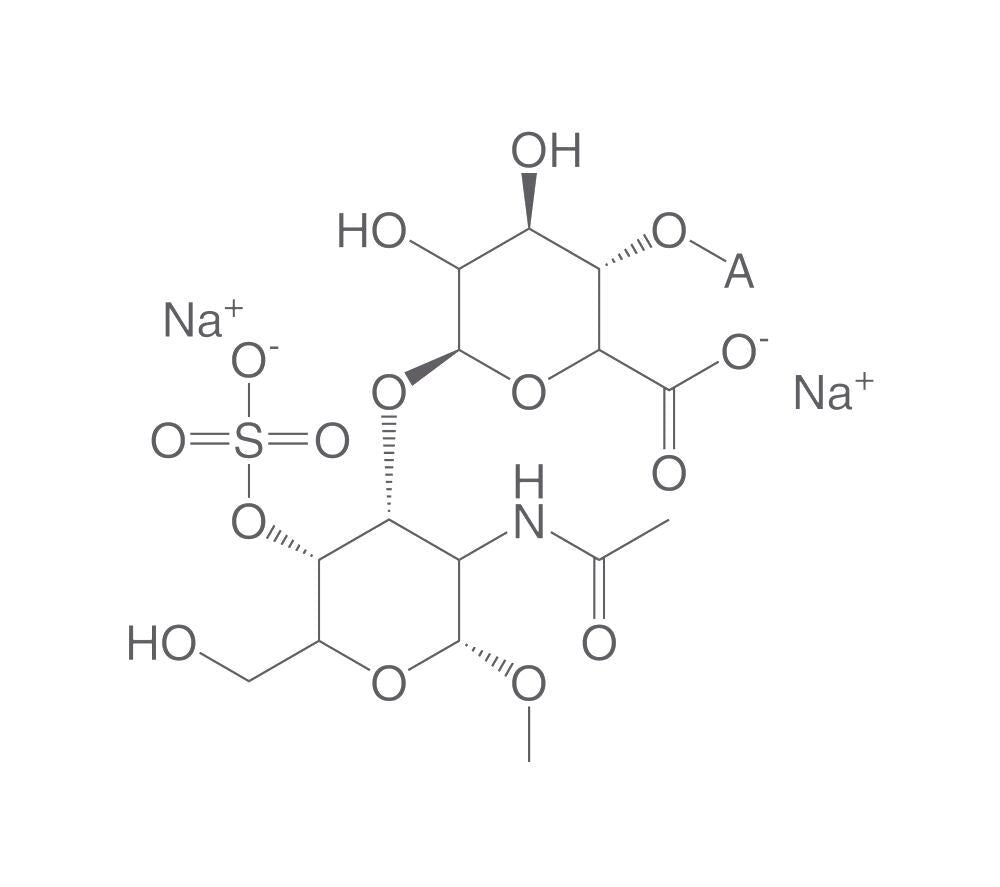


Description
Dermatan sulphate sodium salt is a biochemical reagent for professional laboratory use, identified by CAS number 54328-33-5. The unit corresponds to a net weight of 0,001 kg, helping laboratories manage inventory and prepare precise aliquots without committing to bulk material. This specialty biochemical is available from manufacturer Carl ROTH within a portfolio of chemicals and biochemicals aimed at research environments. Clear CAS-based identification aids documentation in laboratory notebooks, SOPs and material registers. The compact pack format suits glycosaminoglycan-related studies, comparative assays and reference workflows that depend on a defined sodium-salt form. Researchers can integrate the product into existing protocols while maintaining traceable chemical identity across experiments. Milligram-scale packaging reduces waste for infrequent or exploratory use and simplifies organisation in cold-storage inventories typical of sensitive biochemicals.
This article is part of Spectroscopy & physical property standards, in Analytical standards & reference materials.
Key features
- Colour: white to off-white
- Form: powder or solid
- Loss on drying: ≤10 %
- Total Nitrogen (dry substance): batch-specific value
- Total sulphur (dry substance): batch-specific value
- CAS number: 54328-33-5
- Pack sizes: 25 mg, 50 mg, 100 mg
- Storage temperature: +2 to +8 °C
- Product type: Biochemical
- Technical Information Sheet:

- Safety Data Sheet:
Recently viewed
You may also like
Browse related categories
Category
Analytical standards & reference materials
Sub-category
Spectroscopy & physical property standards
Catalogue
Brand
Questions about Dermatan sulphate sodium salt, 25 mg
What is this article?
Dermatan sulphate sodium salt, 25 mg is the article on this page. Luminix Health distributes Carl Roth for laboratory use. It sits in Spectroscopy & physical property standards, inside Analytical standards & reference materials, in Lab chemicals.
These standards check a physical or optical measurement: a refractive-index liquid, a wavelength standard, a viscosity oil, a melting-point substance. The stated value and its uncertainty are the product. They are not general reagents.
A reference material is the article against which another result is compared. Its value is stated, and the uncertainty of that value is part of the product. An ICP or ion standard is a solution of known concentration. A volumetric standard is for titration. A chromatography standard is the peak you match. The grade names, including pharmacopoeia and ASTM, say which impurities were limited. Identity is checked on PubChem. Names follow IUPAC. Medicinal grades follow the European Pharmacopoeia and USP.
Which category should I open next?
The category is Analytical standards & reference materials. The sub-category is Spectroscopy & physical property standards. The catalogue is Lab chemicals.
Shelves beside this one are ICP, AAS & ion standards, Chromatography standards (GC, HPLC, pesticides), Reference substances & reagents (other), Volumetric standard solutions (titration), Reagents for analysis (Ph. Eur., ASTM, DIN) and Indicators & indicator solutions.
What should I check before I order?
When this page shows a safety data sheet, use that manufacturer file. Hazard text does not belong in the sales description. For a pack size, a grade or a certificate that is not on the page, send a quote request or contact the team.
How does ordering and shipping work?
Luminix Health distributes this article from the heart of Europe. Articles in stock ship within 2–5 business days. Standard delivery is free from €250 excl. VAT. Cold-chain goods and dangerous goods under ADR are never included in that free delivery. The terms are in the Shipping Policy. The full brand index is on shop by brand. Who we are is on about us.
Which other categories should I open?
The seven catalogues are Labware, Lab chemicals, Lab instruments, Lab consumables, Chromatography equipment, Lab safety equipment and Life Science & Microbiology.