


Description
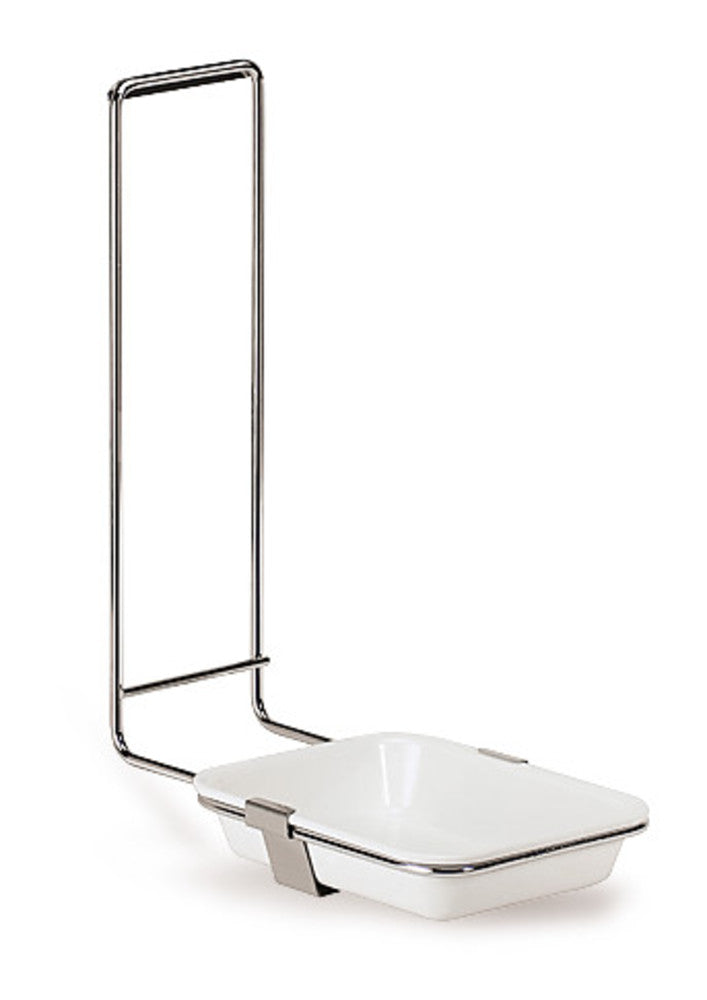
Drip pans with handle are accessory trays for soap and disinfectant stations using 350 ml or 500 ml bottles. They collect residual drips beneath the dispenser outlet, helping keep wall mounts and surrounding work areas cleaner during routine hygiene use. Intended for soaps and lotions within occupational safety and personal-protection setups, the pans support tidy bottle changeovers and day-to-day maintenance at laboratory and clinical wash points. Each unit is supplied as 1 pc and weighs 0,681 kg, with an integrated handle for convenient positioning and handling during installation or cleaning. This accessory from manufacturer BODE Chemie is sized for 350/500 ml bottle formats commonly paired with long-arm soap and disinfectant dispensers. Placed under the bottle, the pan reduces soiling of floors, benches and wall surfaces without altering the dosing mechanism. Suitable for labware hygiene programmes that combine wall dispensers with simple drip management for soaps, lotions and related products.
This article is part of Plastic bottles (narrow & wide mouth), in Bottles & containers.
Key features
- Pack size: 1 pc
- Product type: Drip pans with handle
- Compatible bottles: 350/500 ml
- Handle: Yes
- Weight: 0,681 kg
Recently viewed
You may also like
Browse related categories
Category
Sub-category
Plastic bottles (narrow & wide mouth)
Catalogue
Brand
Questions about Drip pans with handle, for bottles 350/500 ml, 1 unit(s)
What is this article?
Drip pans with handle, for bottles 350/500 ml, 1 unit(s) is the article on this page. Luminix Health distributes BODE Chemie for laboratory use. It sits in Plastic bottles (narrow & wide mouth), inside Bottles & containers, in Labware.
A plastic bottle is polyethylene, polypropylene or a fluoropolymer, narrow-mouth for pouring or wide-mouth for powders. It is the choice when the bottle must not shatter, and it is the wrong choice for solvents that swell the plastic.
A laboratory bottle is a closed container with a stated volume and a neck that takes a cap, a stopper or a dispenser. Borosilicate glass is the choice when the liquid is a solvent, or when the bottle will be heated or autoclaved. Polyethylene and polypropylene are the choice when the bottle must not shatter, or when hydrofluoric acid would attack glass. A narrow mouth pours. A wide mouth is for powders and for reaching the bottom. Laboratory ware of this kind is indexed under ISO laboratory glassware. Traceable volume sits with the BIPM and NIST Physical Measurement.
Which category should I open next?
The category is Bottles & containers. The sub-category is Plastic bottles (narrow & wide mouth). The catalogue is Labware.
Shelves beside this one are Laboratory glass bottles, Sample containers & jars, Canisters & jerrycans, Wash bottles and Bottle accessories (pouring rings, dispensers, caps).
What should I check before I order?
The technical information on this page is the manufacturer's sheet. Read that, not a rewritten specification.
When this page shows a safety data sheet, use that manufacturer file. Hazard text does not belong in the sales description. For a pack size, a grade or a certificate that is not on the page, send a quote request or contact the team.
How does ordering and shipping work?
Luminix Health distributes this article from the heart of Europe. Articles in stock ship within 2–5 business days. Standard delivery is free from €250 excl. VAT. Cold-chain goods and dangerous goods under ADR are never included in that free delivery. The terms are in the Shipping Policy. The full brand index is on shop by brand. Who we are is on about us.
Which other categories should I open?
The seven catalogues are Labware, Lab chemicals, Lab instruments, Lab consumables, Chromatography equipment, Lab safety equipment and Life Science & Microbiology.