


Description
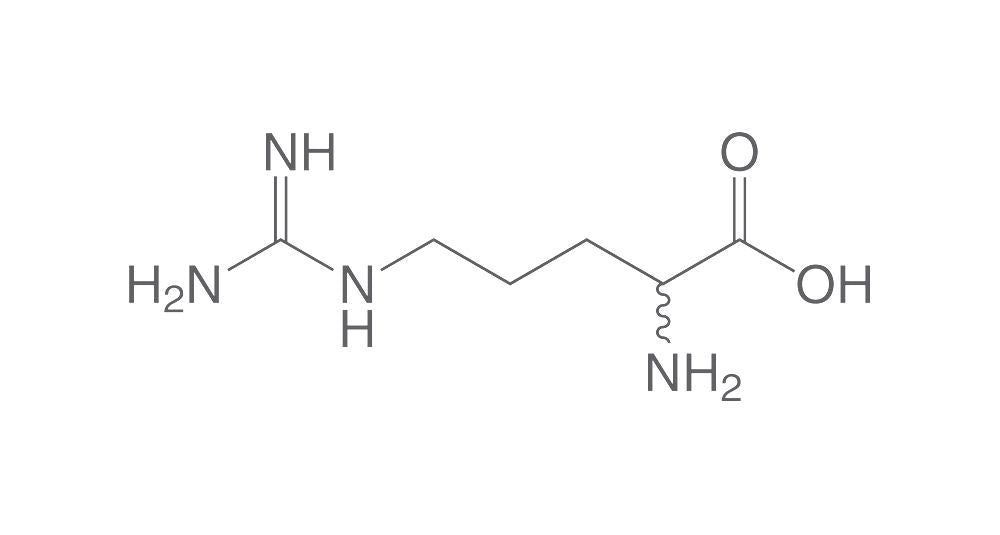
DL-Arginine est un réactif acide aminé pour la biochimie avec un dosage minimal de 98.5 %, proposé sous le numéro CAS 7200-25-1 et EG nr. 230-571-3. La formule empirique est C₆H₁₄N₄O₂ et la masse molaire est 174.2 g/mol, ce qui fournit les données d'identité fondamentales requises pour le travail stœchiométrique et la préparation de solutions. Cette qualité est spécifiée pour la biochimie DL-Arginine du fabricant Carl ROTH associe donc une pureté minimale définie à des informations moléculaires et d'enregistrement claires pour les applications biochimiques. L'acide aminé racémique peut être incorporé dans des systèmes tampons, des composants de milieux ou des préparations analytiques lorsque DL-arginine d'au moins 98.5 % est spécifié. La taille de conditionnement, la pureté, la formule et la masse molaire sont reprises directement de la description du fabricant, ce qui permet une documentation simple dans les inventaires et protocoles de laboratoire sans allégations de qualité supplémentaires au-delà du minimum indiqué de 98.5 % pour la biochimie.
Cet article fait partie de Chimie click, bioconjugaison & réactifs de synthèse, dans Produits biochimiques & réactifs.
Caractéristiques
- Aspect: poudre blanche à blanc cassé
- Dosage: ≥98.5 %
- Métaux lourds (en Pb): ≤0.001 %
- Teneur en cendres: ≤0.1 %
- Perte au séchage: ≤0.5 %
- Numéro CAS: 7200-25-1
- Conditionnements: 5 g, 25 g, 100 g
- Pureté: min. 98.5 %
- Formule brute: C₆H₁₄N₄O₂
- Masse molaire: 174.2 g/mol
- Fiche technique:

- Fiche de données de sécurité:
Compliance & Safety Information
 Avertissement
Hazard Statements (H-Phrases)
Precautionary Statements (P-Phrases)
Récemment consulté
Vous aimerez peut-être aussi
Browse related categories
Category
Produits biochimiques & réactifs
Sub-category
Chimie click, bioconjugaison & réactifs de synthèse
Catalogue
Brand
Questions about DL-Arginine, min. 98.5 %, pour la biochimie, 5 g, plastique
What is this article?
DL-Arginine, min. 98.5 %, pour la biochimie, 5 g, plastique is the article on this page. Luminix Health distributes Carl Roth for laboratory use. It sits in Chimie click, bioconjugaison & réactifs de synthèse, inside Produits biochimiques & réactifs, in Milieux microbiologiques.
Click and bioconjugation reagents join two molecules under mild conditions, often an azide to an alkyne, or an NHS ester to an amine. The linker length and the reactive group are the specification. They are small bottles of a reactive compound, and moisture often ruins them.
A biochemical is a molecule of life, sold as a reagent: an amino acid, a sugar, a nucleotide, a lipid, an enzyme, an antibiotic. The difference from a bulk chemical is that the use is a biological one, and the impurities that matter are the ones that change that use. An enzyme is specified by activity, not only by mass. An antibiotic is specified by potency. Papers are on PubMed. Structures are on PubChem. Strains and lines that consume these reagents are at ATCC.
Which category should I open next?
The category is Produits biochimiques & réactifs. The sub-category is Chimie click, bioconjugaison & réactifs de synthèse. The catalogue is Milieux microbiologiques.
Shelves beside this one are Acides aminés & peptides, Glucides & sucres, Coenzymes, nucléotides & vitamines, Produits biochimiques (autres), Enzymes & substrats, Antibiotiques & antimycotiques, Lipides, stéroïdes & acides gras and Détergents & tensioactifs.
What should I check before I order?
When this page shows a safety data sheet, use that manufacturer file. Hazard text does not belong in the sales description. For a pack size, a grade or a certificate that is not on the page, send a quote request or contact the team.
How does ordering and shipping work?
Luminix Health distributes this article from the heart of Europe. Articles in stock ship within 2–5 business days. Standard delivery is free from €250 excl. VAT. Cold-chain goods and dangerous goods under ADR are never included in that free delivery. The terms are in the Shipping Policy. The full brand index is on shop by brand. Who we are is on about us.
Which other categories should I open?
The seven catalogues are Labware, Lab chemicals, Lab instruments, Lab consumables, Chromatography equipment, Lab safety equipment and Life Science & Microbiology.