
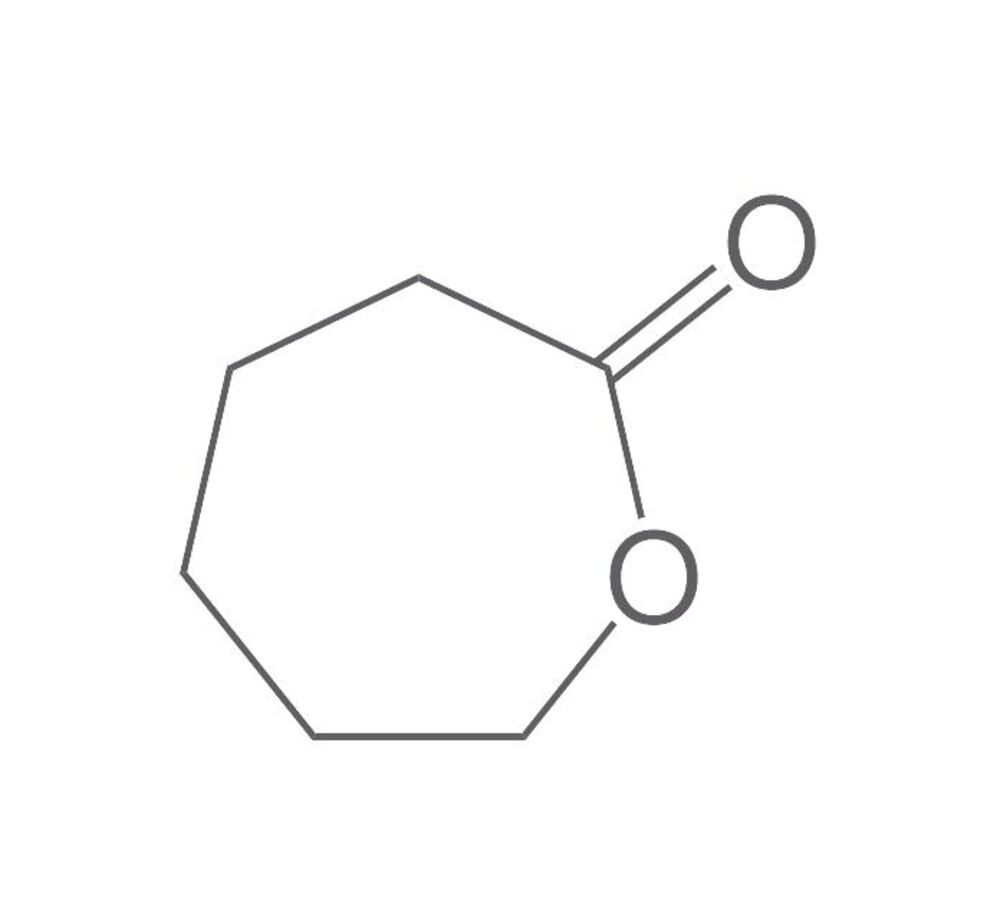


Description
Polycaprolactone est un polyester aliphatique biodégradable, fourni à une pureté minimale de 95 % pour la science des matériaux, la formulation et l'usage en laboratoire biochimique. Il est identifié par le numéro CAS 24980-41-4 et la formule empirique répétitive (C₆H₁₀O₂)ₓ, reflétant son squelette polymère de caprolactone. Le polymère est largement employé lorsqu'une dégradation contrôlée, une aptitude à la mise en œuvre et une compatibilité avec des matrices organiques sont requises, y compris la recherche sur les échafaudages, les études de mélanges et les expériences de revêtement ou de support de spécialité. Les chercheurs apprécient une qualité clairement spécifiée lors de l'évaluation des effets de l'architecture moléculaire sur le comportement mécanique ou de dissolution. Le produit du fabricant Carl ROTH s'inscrit dans les catalogues chimiques et biochimiques destinés aux groupes de R&D qui ont besoin de matériaux de départ polymères fiables. La teneur minimale indiquée prend en charge une préparation reproductible d'échantillons pour des essais analytiques, physiques et orientés application sans engagement sur des volumes à l'échelle industrielle.
Cet article fait partie de Blocs de construction organiques & réactifs de synthèse, dans Produits chimiques organiques & réactifs de synthèse.
Caractéristiques
- Numéro CAS: 24980-41-4
- Pack sizes: 25 g, 50 g, 100 g, 250 g, 500 g
- Pureté: min. 95 %
- Formule brute: (C₆H₁₀O₂)ₓ
- Classe de produit: Produits biochimiques
- Technical Information Sheet:

Compliance & Safety Information
 Avertissement
Hazard Statements (H-Phrases)
Precautionary Statements (P-Phrases)
Récemment consulté
Vous aimerez peut-être aussi
Parcourir les catégories associées
Catégorie
Produits chimiques organiques & réactifs de synthèse
Sous-catégorie
Blocs de construction organiques & réactifs de synthèse
Catalogue
Marque
Questions sur Polycaprolactone, min. 95 %, 25 g
Quel est cet article ?
Polycaprolactone, min. 95 %, 25 g est l'article présenté sur cette page. Luminix Health distribue Carl Roth pour un usage en laboratoire. Il fait partie de Blocs de construction organiques & réactifs de synthèse, dans Produits chimiques organiques & réactifs de synthèse, au sein de Produits chimiques.
Un synthon est une molécule organique achetée pour être intégrée dans une molécule plus grande. La structure, le numéro CAS et la pureté le définissent. Un réactif à 95 % et un réactif à 99,9 % portant le même nom laissent des impuretés différentes dans le produit. Les groupes fonctionnels sont la raison de son choix.
Un produit organique est construit autour du carbone. Dans cette catégorie, il s'agit d'un synthon ou d'un réactif servant à fabriquer une autre molécule : produit de départ, agent de couplage, polymère, PEG. La pureté précise quelles impuretés subsistent. La structure, le numéro CAS et la qualité décident si deux flacons contiennent la même substance. Structures et propriétés figurent sur PubChem. La nomenclature relève de l'IUPAC. La classification suit l'ECHA et le règlement CLP.
Quelle catégorie consulter ensuite ?
La catégorie est Produits chimiques organiques & réactifs de synthèse. La sous-catégorie est Blocs de construction organiques & réactifs de synthèse. Le catalogue est Produits chimiques.
Les catégories voisines sont Polymères, PEGs & silicones et Chimie click, bioconjugaison & réactifs de synthèse.
Que vérifier avant de commander ?
Si cette page propose une fiche de données de sécurité, utilisez ce document du fabricant. Les mentions de danger n'ont pas leur place dans la description commerciale. Pour un conditionnement, une qualité ou un certificat absent de la page, envoyez une demande de devis ou contactez l'équipe.
Comment fonctionnent la commande et la livraison ?
Luminix Health expédie cet article depuis le cœur de l'Europe. Les articles en stock partent sous 2 à 5 jours ouvrables. La livraison standard est gratuite à partir de €250 hors TVA. La chaîne du froid et les marchandises dangereuses sous ADR ne sont jamais comprises dans cette livraison gratuite. Les conditions figurent dans la politique d'expédition. L'index des marques est sur shop by brand. Qui nous sommes : à propos.
Quels autres catalogues ouvrir ?
Les sept catalogues sont Matériel de laboratoire, Produits chimiques, Instruments de laboratoire, Consommables, Chromatographie, Sécurité et Milieux microbiologiques. Si l'article n'est pas au rayon, demandez un devis.