


Beschrijving
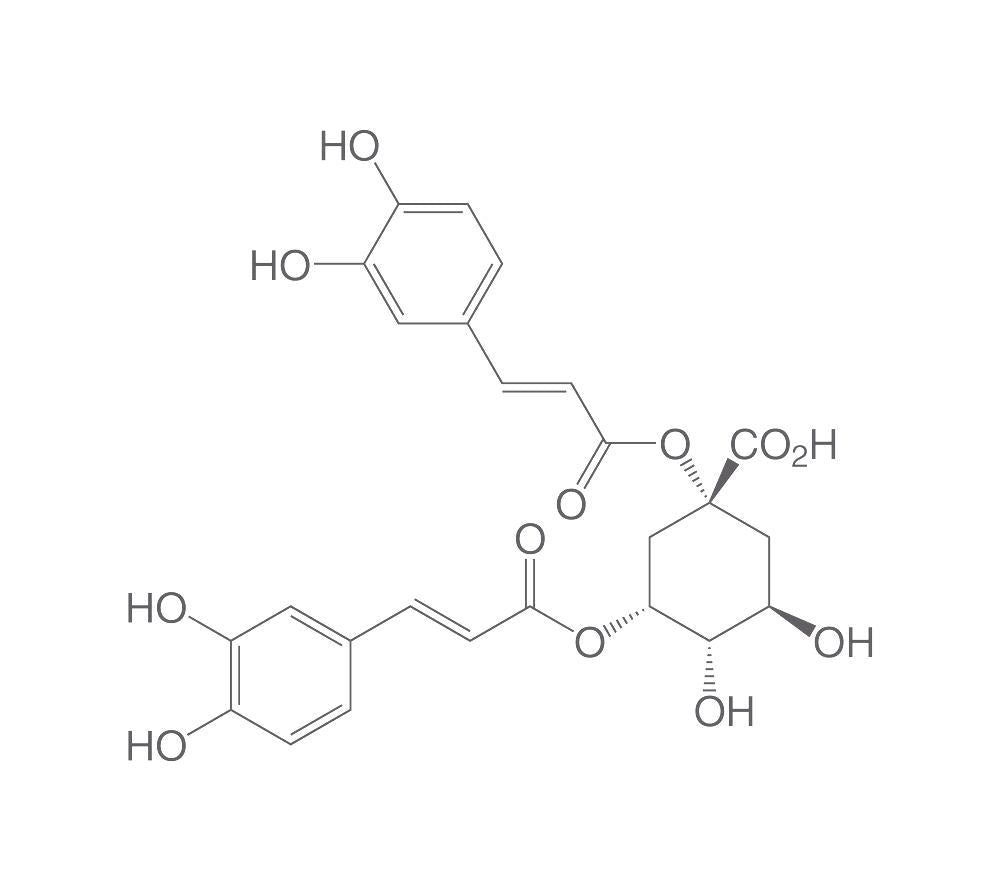
Cynarine is een fytochemische referentiestof die wordt aangeboden in ROTICHROM® HPLC-kwaliteit voor high-performance vloeistofchromatografie en aanverwante analytische scheidingen. Het wordt geïdentificeerd door CAS-nummer 1182-34-9, de empirische formule C₂₅H₂₄O₁₂ en een molaire massa van 516,44 g/mol, wat laboratoria een duidelijk gedefinieerde marker biedt voor methodeopstelling en verbindingverificatie. Het preparaat is verpakt als 10 mg in glas, een formaat dat zeer geschikt is voor nauwkeurige aliquotering, standaardpreparatie en economisch gebruik in chromatografische kalibratieworkflows. Als ROTICHROM® HPLC-materiaal van fabrikant Carl ROTH ondersteunt cynarine de analyse van natuurlijke producten, profilering van plantenextracten en kwaliteitscontroletaken waarvoor een consistente referentie vereist is. De kleine glazen eenheid helpt de vaste stof te beschermen tijdens opslag en overdracht, terwijl deze praktisch blijft voor het bereiden van voorraadoplossingen in analytische concentraties. Onderzoekers en analisten die werken met fenolische of artisjokgerelateerde bestanddelen kunnen deze standaard opnemen in gevalideerde HPLC-methoden, systeemgeschiktheidscontroles en vergelijkende studies. De gedocumenteerde molecuulformule en molaire massa vergemakkelijken nauwkeurige weging, verdunningsberekeningen en traceerbare rapportage binnen gereguleerde of onderzoekslaboratoriumomgevingen.
Dit artikel hoort bij HPLC & LC-MS kwaliteit oplosmiddelen, in Oplosmiddelen. Zie ook Analytische kwaliteit oplosmiddelen (p.a.).
Belangrijkste kenmerken
- Zuiverheid (HPLC): >99 %
- CAS-nummer: 1182-34-9
- Verpakkingsgrootte: 10 mg glas
- Empirische formule: C₂₅H₂₄O₁₂
- Molaire massa: 516,44 g/mol
- Opslagtemperatuur: +4 °C
- Technisch informatieblad:

- Veiligheidsinformatieblad:
Recent bekeken
Misschien vind je dit ook leuk
Browse related categories
Category
Sub-category
Catalogue
Brand
Questions about Cynarine, ROTICHROM® HPLC, 10 mg, glas
What is this article?
Cynarine, ROTICHROM® HPLC, 10 mg, glas is the article on this page. Luminix Health distributes Carl Roth for laboratory use. It sits in HPLC & LC-MS grade solvents, inside Solvents, in Chemicaliën.
HPLC grade limits the absorbance and the residue that would appear as peaks or baseline drift. LC-MS grade goes further on metal ions and on particles that would suppress a mass spectrum. A solvent that is only analytical grade is a false economy on an LC-MS system.
A solvent dissolves. The grade says which impurities are low enough for the method. Analytical grade is the ordinary pure solvent. HPLC and LC-MS grades limit the absorbance and the ions that would become peaks or background. A dry solvent has had water removed. A deuterated solvent is for NMR, where the hydrogen signal would otherwise drown the sample. Technical grade is for cleaning and for synthesis that does not need a chromatogram. Identity is on PubChem. Names follow IUPAC. Hazards follow ECHA, the CLP Regulation and REACH.
Which category should I open next?
The category is Solvents. The sub-category is HPLC & LC-MS grade solvents. The catalogue is Chemicaliën.
Shelves beside this one are Analytical grade solvents (p.a.), Dry & deuterated solvents (NMR, synthesis), Technical & synthesis grade solvents and Green & alternative solvents.
What should I check before I order?
When this page shows a safety data sheet, use that manufacturer file. Hazard text does not belong in the sales description. For a pack size, a grade or a certificate that is not on the page, send a quote request or contact the team.
How does ordering and shipping work?
Luminix Health distributes this article from the heart of Europe. Articles in stock ship within 2–5 business days. Standard delivery is free from €250 excl. VAT. Cold-chain goods and dangerous goods under ADR are never included in that free delivery. The terms are in the Shipping Policy. The full brand index is on shop by brand. Who we are is on about us.
Which other categories should I open?
The seven catalogues are Labware, Lab chemicals, Lab instruments, Lab consumables, Chromatography equipment, Lab safety equipment and Life Science & Microbiology.