
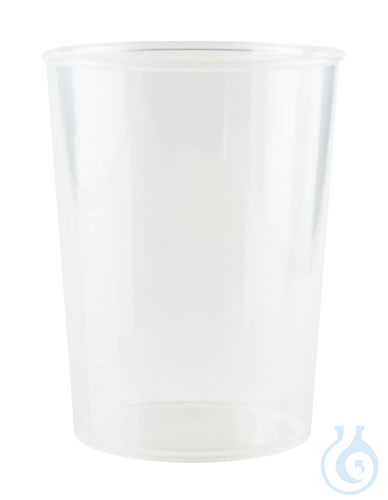



Description
Drinking cup made of polypropylene, 250 ml, for 3 different lids, CE is a practical laboratory drinking vessel designed for controlled fluid intake in clinical, research and teaching environments. Manufactured from polypropylene (PP), the cup provides a lightweight yet robust solution with a working volume of 250 ml. It is engineered to accept three different matching lids, allowing users to select the most suitable closure for their protocol. The CE marking confirms conformity for the intended laboratory application. This drinking cup from manufacturer Hecht is well suited to patient care areas, sample-collection stations and general lab use where a disposable or reusable plastic cup is required. The polypropylene construction offers good chemical resistance to aqueous media and many common laboratory solutions while remaining easy to handle and clean. Its compact 250 ml size balances capacity with convenient one-handed use. Ideal for facilities that standardise on interchangeable lids, the cup supports hygienic workflows and flexible configuration without unnecessary complexity.
This article is part of Sample containers & jars, in Bottles & containers.
Key features
- Pack size: 1 pc
- Material: Polypropylene (PP)
- Volume: 250 ml
- Lid compatibility: For 3 different lids
- Marking: CE
- Product type: Drinking cup
Recently viewed
You may also like
Browse related categories
Category
Sub-category
Catalogue
Brand
Questions about Feeding cup, polypropylene, 250 ml, for 3 different covers
What is this article?
Feeding cup, polypropylene, 250 ml, for 3 different covers is the article on this page. Luminix Health distributes Hecht for laboratory use. It sits in Sample containers & jars, inside Bottles & containers, in Labware.
A sample container or jar is the vessel the sample travels in, with a closure that survives the trip. The volume and the liner decide whether the sample that arrives is the sample that was taken.
A laboratory bottle is a closed container with a stated volume and a neck that takes a cap, a stopper or a dispenser. Borosilicate glass is the choice when the liquid is a solvent, or when the bottle will be heated or autoclaved. Polyethylene and polypropylene are the choice when the bottle must not shatter, or when hydrofluoric acid would attack glass. A narrow mouth pours. A wide mouth is for powders and for reaching the bottom. Laboratory ware of this kind is indexed under ISO laboratory glassware. Traceable volume sits with the BIPM and NIST Physical Measurement.
Which category should I open next?
The category is Bottles & containers. The sub-category is Sample containers & jars. The catalogue is Labware.
Shelves beside this one are Laboratory glass bottles, Plastic bottles (narrow & wide mouth), Canisters & jerrycans, Wash bottles and Bottle accessories (pouring rings, dispensers, caps).
What should I check before I order?
When this page shows a safety data sheet, use that manufacturer file. Hazard text does not belong in the sales description. For a pack size, a grade or a certificate that is not on the page, send a quote request or contact the team.
How does ordering and shipping work?
Luminix Health distributes this article from the heart of Europe. Articles in stock ship within 2–5 business days. Standard delivery is free from €250 excl. VAT. Cold-chain goods and dangerous goods under ADR are never included in that free delivery. The terms are in the Shipping Policy. The full brand index is on shop by brand. Who we are is on about us.
Which other categories should I open?
The seven catalogues are Labware, Lab chemicals, Lab instruments, Lab consumables, Chromatography equipment, Lab safety equipment and Life Science & Microbiology.