



Description
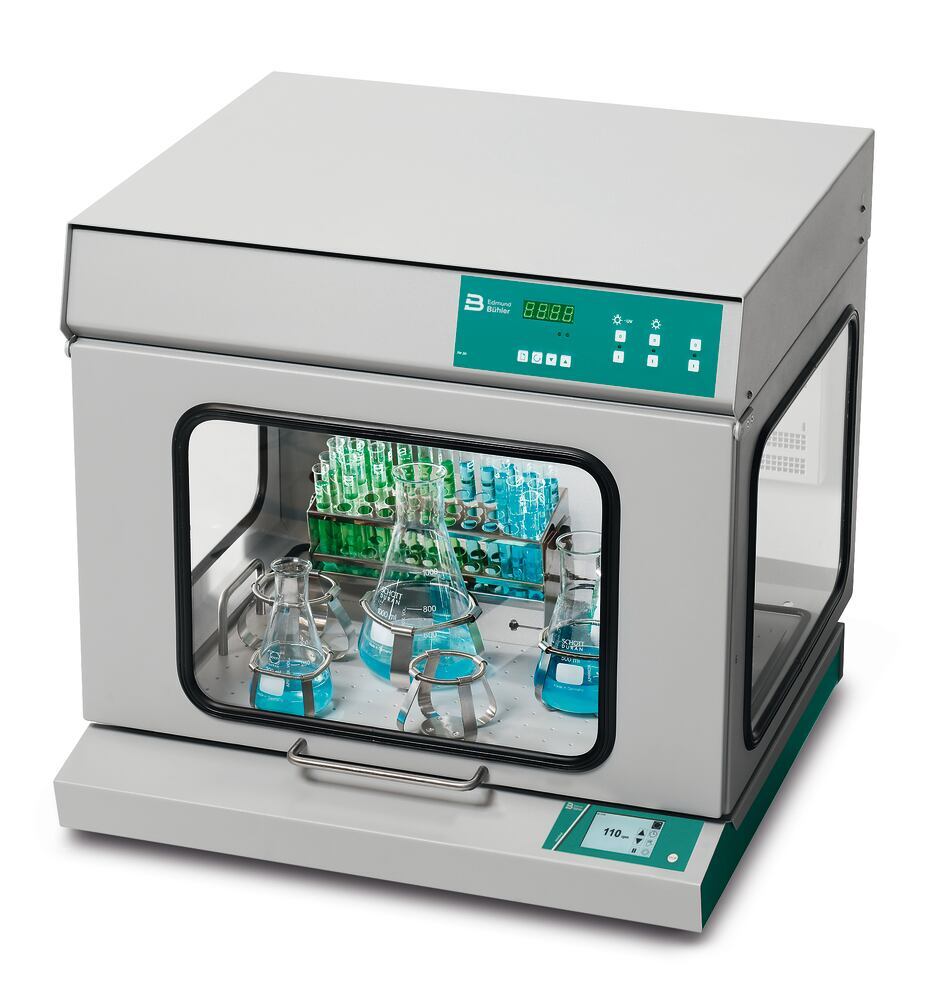
Incubation hood TH 30 is a temperature-controlled hood for laboratory shaking applications, covering a working range from 5 °C above room temperature up to 50 °C. With external dimensions of W 680 × D 610 × H 560 mm, the unit provides an enclosed environment for vessels processed on compatible shaker platforms during incubation, cultivation and temperature-sensitive mixing workflows. The hood supports research and quality-control laboratories that need stable thermal conditions around agitated samples without transferring vessels to a separate incubator. Supplied as 1 piece and weighing 49,500 kg, the TH 30 is built for dedicated bench or system integration use within incubation-shaker setups. Manufactured by Edmund Bühler, it complements the SM-series laboratory appliances used for vortexing and controlled agitation. Typical applications include microbial and cell-culture support steps, enzyme reactions and other protocols where gentle shaking is combined with defined elevated temperature. The spacious interior accommodates common flask and bottle formats while maintaining access for loading and monitoring. Robust construction suits continuous operation in life-science, biotechnology and analytical environments that require reproducible thermal enclosure around actively mixed samples.
This article is part of Incubators, in Heating, drying & cooling.
Key features
- Pack size: 1 pc
- Product type: Incubation hood
- Model: TH 30
- Temperature range: 5 °C above RT to 50 °C
- Dimensions: W 680 × D 610 × H 560 mm
- Weight: 49,500 kg
- Technical Information Sheet:

Recently viewed
You may also like
Browse related categories
Category
Sub-category
Catalogue
Brand
Questions about Incubation hood TH 30, 5°C a. RT to 50°C, W 680xD 610xH 560 mm, 1 unit(s)
What is this article?
Incubation hood TH 30, 5°C a. RT to 50°C, W 680xD 610xH 560 mm, 1 unit(s) is the article on this page. Luminix Health distributes Edmund Bühler for laboratory use. It sits in Incubators, inside Heating, drying & cooling, in Lab instruments.
An incubator holds the mild, even temperature a culture needs, often 25 °C or 37 °C, sometimes with carbon dioxide. It is not a drying oven. Uniformity and, for cells, the gas control are the specification. A flask of cells in a drying oven is a dead flask.
Temperature equipment either holds a set point or drives a sample toward one. An oven dries. A furnace reaches the temperatures of ashing and melting. A bath surrounds a vessel with water or oil. A circulator moves that fluid. An incubator holds the mild warmth of a culture. An autoclave uses steam under pressure to sterilise. The number that matters is the temperature the article actually reaches, not the number painted on the dial. Temperature is part of the international system kept by the BIPM and compared by EURAMET.
Which category should I open next?
The category is Heating, drying & cooling. The sub-category is Incubators. The catalogue is Lab instruments.
Shelves beside this one are Muffle & tube furnaces, Heating mantles, Circulators, chillers & thermostats, Drying ovens & climate chambers, Water & oil baths, Hot plates & heating blocks, Heating & cooling (other), Temperature control accessories, Laboratory refrigerators & freezers, Autoclaves & sterilisers, Bunsen & gas burners and Heating tapes, cables & plates.
What should I check before I order?
The technical information on this page is the manufacturer's sheet. Read that, not a rewritten specification.
When this page shows a safety data sheet, use that manufacturer file. Hazard text does not belong in the sales description. For a pack size, a grade or a certificate that is not on the page, send a quote request or contact the team.
How does ordering and shipping work?
Luminix Health distributes this article from the heart of Europe. Articles in stock ship within 2–5 business days. Standard delivery is free from €250 excl. VAT. Cold-chain goods and dangerous goods under ADR are never included in that free delivery. The terms are in the Shipping Policy. The full brand index is on shop by brand. Who we are is on about us.
Which other categories should I open?
The seven catalogues are Labware, Lab chemicals, Lab instruments, Lab consumables, Chromatography equipment, Lab safety equipment and Life Science & Microbiology.