


Description
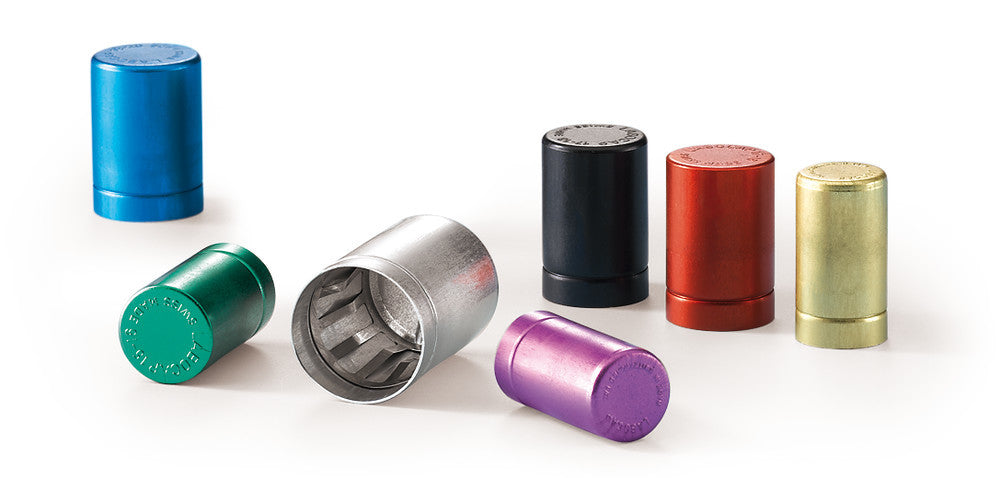
LABOCAP-caps without handle in blue are metal closures intended for glassware with a 15/16 mm diameter. Fabricated from chrome-nickel steel, they deliver a durable, corrosion-resistant cover for culture vials and similar glass vessels used in the laboratory. The absence of a handle yields a low-profile cap that sits neatly on the glass neck and fits well in standard racks and storage boxes. As accessories for glass culture vials, they support microbiology, molecular biology, and cell-culture workflows in which blue colour coding distinguishes sample sets or media batches. Packaged as 100 pieces from manufacturer ROTH SELECTION, the unit is suited to stocking benches and shared preparation areas. The full pack weighs 0,450 kg. The blue chrome-nickel finish is easy to recognise beside other LABOCAP colours and remains practical through frequent placement and removal. These LABOCAP-caps without handle for 15/16 mm glass provide a straightforward reusable metal option where a handle-free blue cap is specified for mid-size culture glassware.
This article is part of Biological buffers (Tris, HEPES, MOPS), in Buffers & pH solutions.
Key features
- Pack size: 100 pc(s)
- Product type: LABOCAP-caps without handle
- Colour: blue
- Material: chrome-nickel steel
- Fit: for glass Ø 15/16 mm
- Handle: without handle
Recently viewed
You may also like
Browse related categories
Category
Sub-category
Biological buffers (Tris, HEPES, MOPS)
Catalogue
Brand
Questions about LABOCAP-caps without handle, blue, chrome-nikkel steel, f. glass. Ø 15/16mm
What is this article?
LABOCAP-caps without handle, blue, chrome-nikkel steel, f. glass. Ø 15/16mm is the article on this page. Luminix Health distributes Carl Roth for laboratory use. It sits in Biological buffers (Tris, HEPES, MOPS), inside Buffers & pH solutions, in Lab chemicals.
Tris, HEPES, MOPS and their relatives hold pH in a range that cells and proteins tolerate, with a pKa near the working pH. The useful range is roughly one unit either side of the pKa. A phosphate buffer and Tris are not interchangeable in a method that names one of them, because the ion itself has effects.
A buffer resists a change in pH when a little acid or base is added. It does that because a weak acid and its conjugate base are both present. A pH buffer used to calibrate a meter has a stated value at a stated temperature. A biological buffer such as Tris or HEPES is chosen because it holds the pH of a living system and does not poison it. Conductivity standards are the sister articles for a conductivity meter. The ions are on PubChem. Electrode calibration practice sits with EURAMET and BELAC.
Which category should I open next?
The category is Buffers & pH solutions. The sub-category is Biological buffers (Tris, HEPES, MOPS). The catalogue is Lab chemicals.
Shelves beside this one are pH buffers & conductivity standards and Buffers (other).
What should I check before I order?
The technical information on this page is the manufacturer's sheet. Read that, not a rewritten specification.
When this page shows a safety data sheet, use that manufacturer file. Hazard text does not belong in the sales description. For a pack size, a grade or a certificate that is not on the page, send a quote request or contact the team.
How does ordering and shipping work?
Luminix Health distributes this article from the heart of Europe. Articles in stock ship within 2–5 business days. Standard delivery is free from €250 excl. VAT. Cold-chain goods and dangerous goods under ADR are never included in that free delivery. The terms are in the Shipping Policy. The full brand index is on shop by brand. Who we are is on about us.
Which other categories should I open?
The seven catalogues are Labware, Lab chemicals, Lab instruments, Lab consumables, Chromatography equipment, Lab safety equipment and Life Science & Microbiology.