


Description
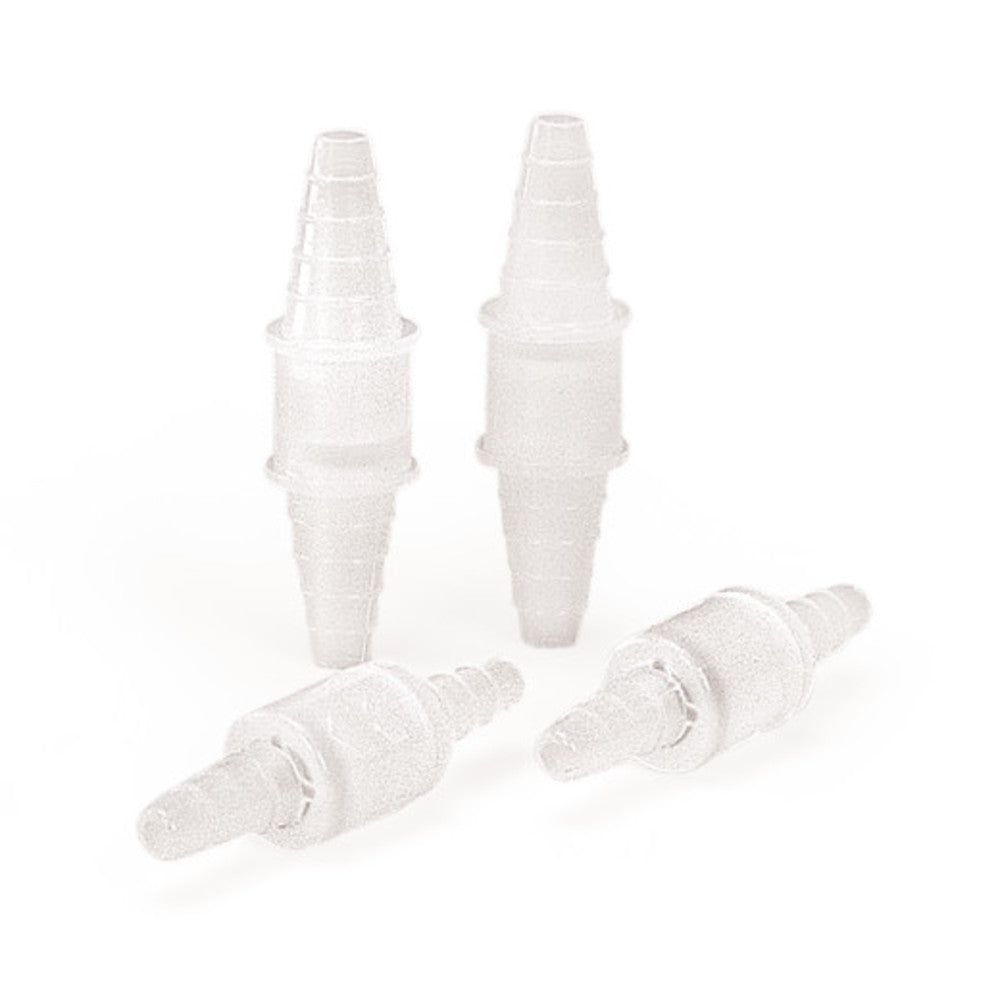
Rotilabo® check valves deliver polypropylene one-way control for laboratory hose systems that must restrict reverse flow. Fabricated in natural/transparent PP with a length of 70 mm, they combine a clear body for path visibility with a slightly longer form factor suited to flexible tubing runs in liquid handling, sampling, and media-transfer setups. The valves seat readily in hose-connector assemblies used on the bench or within instrument feed lines, supporting directional flow without complex multi-piece fittings. Polypropylene construction provides chemical resistance suitable for many aqueous media and mild solvents typical of analytical and research laboratories. Packed as 5 pc(s) at a pack weight of 0,041 kg, they are convenient for equipping several stations or maintaining spare stock. These Rotilabo® check valves from manufacturer ROTH SELECTION align with standard hose-accessory and liquid-handling workflows. Use them in-line wherever unidirectional protection helps safeguard upstream reservoirs, stabilise transfer circuits, or reduce back-contamination risk, while keeping tubing layouts compact and straightforward to reconfigure.
This article is part of Stopcocks & valves, in Tubing, hoses & fittings.
Key features
- Pack size: 5 pc(s)
- Product type: Check valves
- Material: PP
- Colour: natural/transparent
- Length: 70 mm
- Weight: 0,041 kg
Recently viewed
You may also like
Browse related categories
Category
Sub-category
Catalogue
Brand
Questions about Rotilabo®-check valves, PP, natural/transparent, length 70 mm, 5 unit(s)
What is this article?
Rotilabo®-check valves, PP, natural/transparent, length 70 mm, 5 unit(s) is the article on this page. Luminix Health distributes Carl Roth for laboratory use. It sits in Stopcocks & valves, inside Tubing, hoses & fittings, in Labware.
A stopcock opens and closes a line, or directs it between ports. Glass stopcocks have a ground plug that needs grease or a PTFE key. The bore decides the flow. A two-way and a three-way key are different parts.
Tubing is how a liquid or a gas moves between two vessels without being poured. Silicone stays flexible and survives repeated autoclaving. PTFE resists almost every solvent and is stiff. PVC is the ordinary flexible line for water and for mild aqueous work. The fitting, not the tube, is what usually leaks: the barb, the thread and the stopcock have to match the tube bore. Glass and plastic apparatus around these lines is indexed under ISO laboratory ware.
Which category should I open next?
The category is Tubing, hoses & fittings. The sub-category is Stopcocks & valves. The catalogue is Labware.
Shelves beside this one are Hose connectors, adapters & fittings, PVC, PTFE & other tubing, Silicone tubing and Tubing accessories.
What should I check before I order?
The technical information on this page is the manufacturer's sheet. Read that, not a rewritten specification.
When this page shows a safety data sheet, use that manufacturer file. Hazard text does not belong in the sales description. For a pack size, a grade or a certificate that is not on the page, send a quote request or contact the team.
How does ordering and shipping work?
Luminix Health distributes this article from the heart of Europe. Articles in stock ship within 2–5 business days. Standard delivery is free from €250 excl. VAT. Cold-chain goods and dangerous goods under ADR are never included in that free delivery. The terms are in the Shipping Policy. The full brand index is on shop by brand. Who we are is on about us.
Which other categories should I open?
The seven catalogues are Labware, Lab chemicals, Lab instruments, Lab consumables, Chromatography equipment, Lab safety equipment and Life Science & Microbiology.