


Description
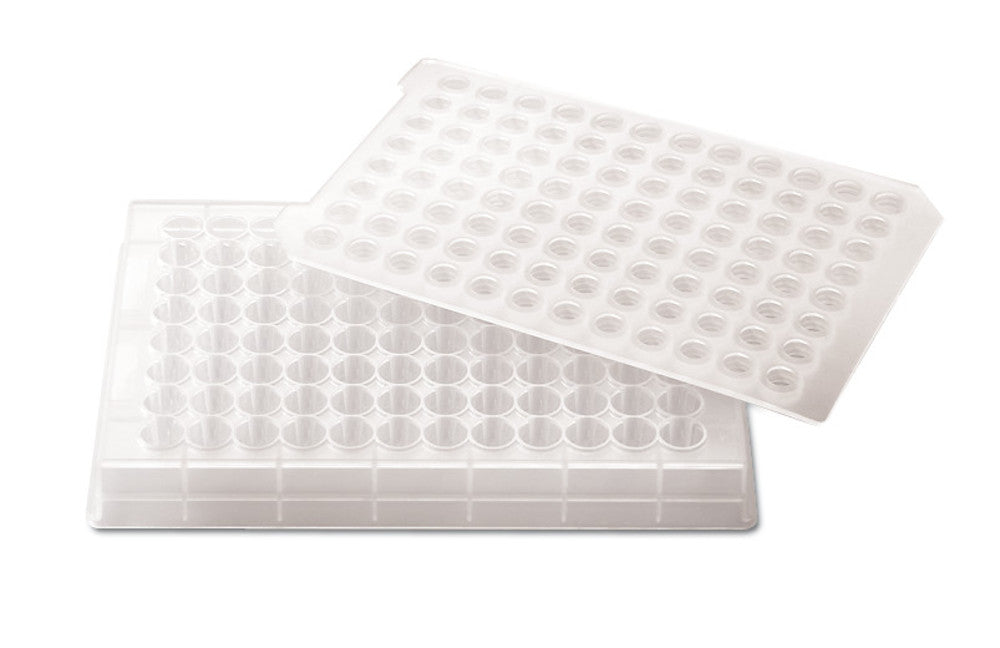
Silicone sealing mats for Rotilabo® polypropylene microtest plates provide a flexible cover solution matched to 350 µl PP microtest plate formats used in microtitration work. The silicone material conforms to the plate surface to help limit evaporation, reduce cross-contamination risk between wells and protect samples during short-term holding, mixing or transport within the laboratory. Designed specifically for Rotilabo® PP microtest plates, the mats integrate into existing multi-well plate and foil workflows in microbiology, molecular biology and cell-culture settings. Each pack supplies 50 pieces, a practical quantity for laboratories that seal plates repeatedly across assay batches. These accessories come from manufacturer Carl ROTH as part of the broader Rotilabo® microtest plate system. Pack weight is 1,800 kg. Use the mats whenever a silicone seal is required on compatible 350 µl polypropylene microtest plates for temporary closure, incubation steps or storage between processing stages, without changing the underlying plate format or automation footprint.
This article is part of Plate seals & sealing films, in Microplates, PCR & reaction tubes.
Key features
- Pack size: 50 pc(s)
- Product type: Silicone sealing mat
- Compatibility: Rotilabo® PP microtest plates
- Well volume match: 350 µl
- Material: Silicone
- Weight: 1,800 kg
Recently viewed
You may also like
Questions about Sealing mat made of silicone for, Rotilabo®-PP-microtest plates, , 50 unit(s)
What is this article?
Sealing mat made of silicone for, Rotilabo®-PP-microtest plates, , 50 unit(s) is the article on this page. Luminix Health distributes Carl Roth for laboratory use. It sits in Plate seals & sealing films, inside Microplates, PCR & reaction tubes, in Lab consumables.
A plate seal stops a well from evaporating in a cycler or a incubator. Adhesive films, heat seals and cap mats are different closures. Optical seals are clear enough to read through. A seal that lifts in the cycler is a lost sample and a contaminated block.
A microplate is an array of wells so the same step can be done many times. A deep-well plate holds more volume. A PCR plate or a strip of tubes is thin-walled so the temperature of a cycler reaches the liquid quickly. A seal keeps the well from evaporating. The well number, the working volume and whether the plate is skirted for a robot are the choices. Diagnostic test systems are listed under ISO in vitro diagnostic systems. Methods are on PubMed.
Which category should I open next?
The category is Microplates, PCR & reaction tubes. The sub-category is Plate seals & sealing films. The catalogue is Lab consumables.
Shelves beside this one are Microcentrifuge & reaction tubes, PCR plates, tubes & strips, Microplates and Deep-well plates.
What should I check before I order?
The technical information on this page is the manufacturer's sheet. Read that, not a rewritten specification.
When this page shows a safety data sheet, use that manufacturer file. Hazard text does not belong in the sales description. For a pack size, a grade or a certificate that is not on the page, send a quote request or contact the team.
How does ordering and shipping work?
Luminix Health distributes this article from the heart of Europe. Articles in stock ship within 2–5 business days. Standard delivery is free from €250 excl. VAT. Cold-chain goods and dangerous goods under ADR are never included in that free delivery. The terms are in the Shipping Policy. The full brand index is on shop by brand. Who we are is on about us.
Which other categories should I open?
The seven catalogues are Labware, Lab chemicals, Lab instruments, Lab consumables, Chromatography equipment, Lab safety equipment and Life Science & Microbiology.