



Description
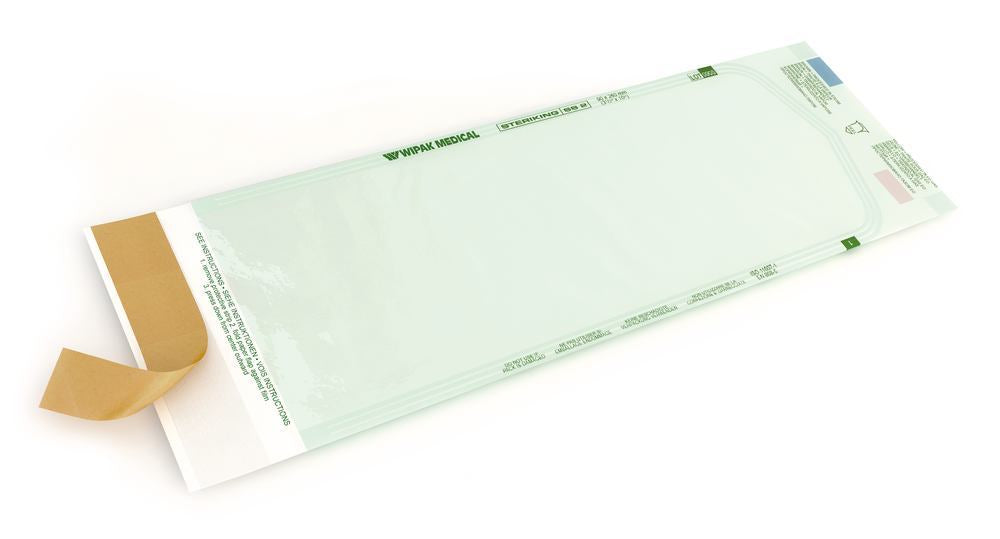
Steriking® sterilisation bag provides a self-adhesive pouch format of 250 x 400 mm for packaging laboratory items destined for sterilisation. The larger working area suits bulkier instruments, multi-piece sets and materials that need more space than compact bags allow, while remaining practical for standard sterilisation accessory handling. Self-adhesive closure enables rapid sealing during preparation without heat sealers or extra consumables. Each unit pack holds 200 pc(s) at a total weight of 2,800 kg, supporting predictable replenishment in busy laboratories. Intended for use in microbiology, molecular biology and cell-culture settings, the bag helps structure loads and keep contents together through transport and processing steps. These Steriking® bags from manufacturer WIPAK belong to established sterilisation-bag ranges used alongside other labware. Clear size identification assists selection next to smaller or larger variants. Apply this format where medium-to-large pouch capacity is required for organised sterilisation accessory workflows.
This article is part of Autoclaves & sterilisers, in Heating, drying & cooling.
Key features
- Pack size: 200 pc(s)
- Product type: Self-adhesive sterilisation bag
- Brand: Steriking®
- Dimensions: 250 x 400 mm
- Closure: Self-adhesive
- Weight: 2,800 kg
- Technical Information Sheet:

Recently viewed
You may also like
Browse related categories
Category
Sub-category
Catalogue
Brand
Questions about Sterilisation bag Steriking®, self-adhesive, 250 x 400 mm, 200 unit(s)
What is this article?
Sterilisation bag Steriking®, self-adhesive, 250 x 400 mm, 200 unit(s) is the article on this page. Luminix Health distributes WIPAK for laboratory use. It sits in Autoclaves & sterilisers, inside Heating, drying & cooling, in Lab instruments.
An autoclave sterilises with steam under pressure, typically 121 °C. A load that is wrapped wrong, or a liquid in a sealed full bottle, does not see that temperature, or it bursts. Chamber volume and the cycles it can run are the specification.
Temperature equipment either holds a set point or drives a sample toward one. An oven dries. A furnace reaches the temperatures of ashing and melting. A bath surrounds a vessel with water or oil. A circulator moves that fluid. An incubator holds the mild warmth of a culture. An autoclave uses steam under pressure to sterilise. The number that matters is the temperature the article actually reaches, not the number painted on the dial. Temperature is part of the international system kept by the BIPM and compared by EURAMET.
Which category should I open next?
The category is Heating, drying & cooling. The sub-category is Autoclaves & sterilisers. The catalogue is Lab instruments.
Shelves beside this one are Muffle & tube furnaces, Heating mantles, Circulators, chillers & thermostats, Drying ovens & climate chambers, Water & oil baths, Hot plates & heating blocks, Incubators, Heating & cooling (other), Temperature control accessories, Laboratory refrigerators & freezers, Bunsen & gas burners and Heating tapes, cables & plates.
What should I check before I order?
The technical information on this page is the manufacturer's sheet. Read that, not a rewritten specification.
When this page shows a safety data sheet, use that manufacturer file. Hazard text does not belong in the sales description. For a pack size, a grade or a certificate that is not on the page, send a quote request or contact the team.
How does ordering and shipping work?
Luminix Health distributes this article from the heart of Europe. Articles in stock ship within 2–5 business days. Standard delivery is free from €250 excl. VAT. Cold-chain goods and dangerous goods under ADR are never included in that free delivery. The terms are in the Shipping Policy. The full brand index is on shop by brand. Who we are is on about us.
Which other categories should I open?
The seven catalogues are Labware, Lab chemicals, Lab instruments, Lab consumables, Chromatography equipment, Lab safety equipment and Life Science & Microbiology.