


Description
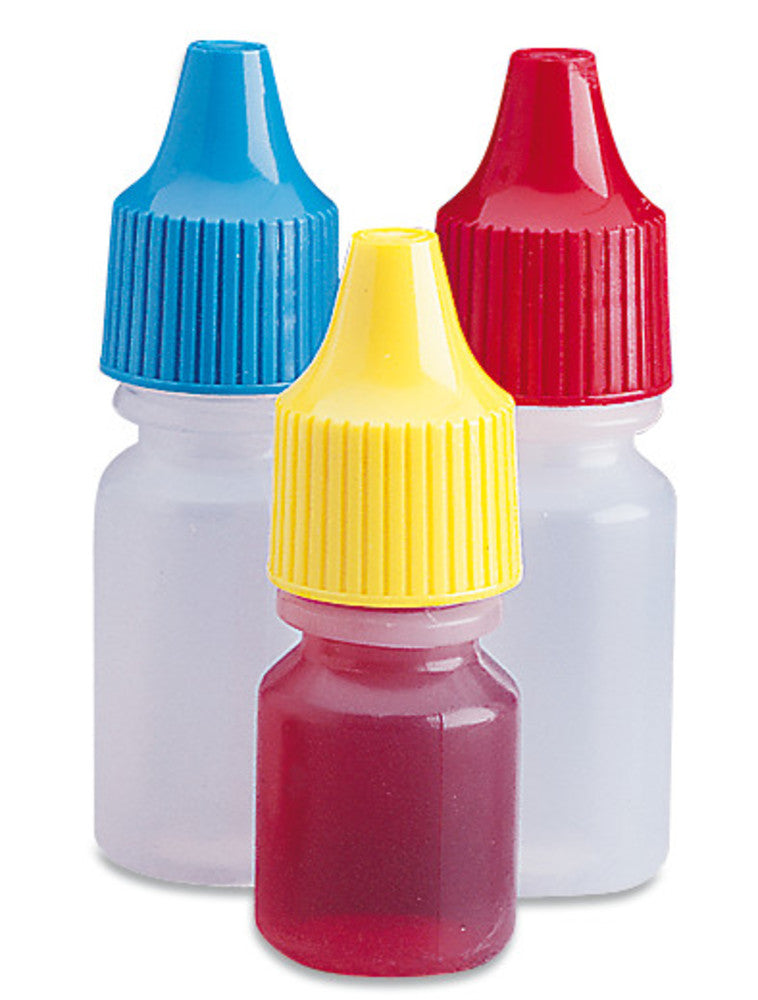
Dropping bottles made of LDPE with an 8 ml fill volume and colour-coded lids are intended for controlled dispensing of laboratory liquids in small to medium aliquots. The low-density polyethylene construction yields a flexible, lightweight bottle that supports gentle squeeze delivery of reagents, dyes, buffers, and other working solutions. Colour-coded lids enable quick visual identification of contents, which is valuable when several formulations are used in parallel on the bench. Supplied in a pack of 25 pieces with a combined weight of 0,226 kg, the set suits routine replenishment in busy laboratories. These bottles from manufacturer Nalgene serve analytical chemistry, biology, quality-control, and teaching applications where dropwise addition and clear lid coding improve handling safety and organisation. They form part of standard laboratory vessel and dropper-bottle ranges for everyday liquid-handling tasks that demand compact, practical LDPE dispensers.
This article is part of Plastic bottles (narrow & wide mouth), in Bottles & containers.
Key features
- Pack size: 25 pc(s)
- Product type: Dropping bottles
- Material: LDPE
- Capacity: 8 ml
- Closure: Colour-coded lids
- Weight: 0,226 kg
Recently viewed
You may also like
Browse related categories
Category
Sub-category
Plastic bottles (narrow & wide mouth)
Catalogue
Brand
Questions about Dropping bottles, LDPE, 8 ml, colour-coded lids, 25 unit(s)
What is this article?
Dropping bottles, LDPE, 8 ml, colour-coded lids, 25 unit(s) is the article on this page. Luminix Health distributes Nalgene for laboratory use. It sits in Plastic bottles (narrow & wide mouth), inside Bottles & containers, in Labware.
A plastic bottle is polyethylene, polypropylene or a fluoropolymer, narrow-mouth for pouring or wide-mouth for powders. It is the choice when the bottle must not shatter, and it is the wrong choice for solvents that swell the plastic.
A laboratory bottle is a closed container with a stated volume and a neck that takes a cap, a stopper or a dispenser. Borosilicate glass is the choice when the liquid is a solvent, or when the bottle will be heated or autoclaved. Polyethylene and polypropylene are the choice when the bottle must not shatter, or when hydrofluoric acid would attack glass. A narrow mouth pours. A wide mouth is for powders and for reaching the bottom. Laboratory ware of this kind is indexed under ISO laboratory glassware. Traceable volume sits with the BIPM and NIST Physical Measurement.
Which category should I open next?
The category is Bottles & containers. The sub-category is Plastic bottles (narrow & wide mouth). The catalogue is Labware.
Shelves beside this one are Laboratory glass bottles, Sample containers & jars, Canisters & jerrycans, Wash bottles and Bottle accessories (pouring rings, dispensers, caps).
What should I check before I order?
The technical information on this page is the manufacturer's sheet. Read that, not a rewritten specification.
When this page shows a safety data sheet, use that manufacturer file. Hazard text does not belong in the sales description. For a pack size, a grade or a certificate that is not on the page, send a quote request or contact the team.
How does ordering and shipping work?
Luminix Health distributes this article from the heart of Europe. Articles in stock ship within 2–5 business days. Standard delivery is free from €250 excl. VAT. Cold-chain goods and dangerous goods under ADR are never included in that free delivery. The terms are in the Shipping Policy. The full brand index is on shop by brand. Who we are is on about us.
Which other categories should I open?
The seven catalogues are Labware, Lab chemicals, Lab instruments, Lab consumables, Chromatography equipment, Lab safety equipment and Life Science & Microbiology.