


Description
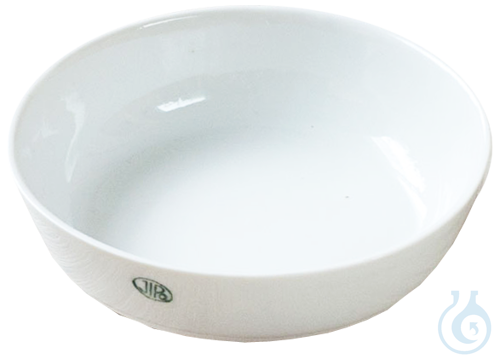
Low-form ignition dish d × h × V/ml 81 mm-20 mm-70 ml is a laboratory dish intended for high-temperature ignition and ashing work. With a diameter of 81 mm, height of 20 mm and nominal volume of 70 ml, the shallow profile supports efficient heating and sample handling in analytical procedures. The open low-form geometry facilitates access during weighing, drying or calcination steps common in routine laboratory workflows. Supplied in packs of 5 pc(s), these dishes belong to standard labware ranges and are suitable for general inorganic sample preparation. Manufactured by Hecht, the item fits typical requirements for durable ignition vessels used across chemistry and materials testing environments. Dimensions are given as diameter × height × volume to allow straightforward selection against existing protocols. The design prioritises thermal stability and ease of transfer without additional fittings. Ideal for laboratories needing consistent low-profile dishes for repeated ignition cycles.
This article is part of Crucibles, in Dishes, crucibles & porcelain.
Key features
- Pack size: 5 pc(s)
- Form: Low-form
- Diameter: 81 mm
- Height: 20 mm
- Volume: 70 ml
- Type: Ignition dish
Recently viewed
You may also like
Browse related categories
Category
Sub-category
Catalogue
Brand
Questions about Incinerating dish, low form dxhx V/ml 81 mm-20 mm-70 ml
What is this article?
Incinerating dish, low form dxhx V/ml 81 mm-20 mm-70 ml is the article on this page. Luminix Health distributes Hecht for laboratory use. It sits in Crucibles, inside Dishes, crucibles & porcelain, in Labware.
A crucible holds a sample in a furnace or over a flame, at temperatures that would soften a borosilicate beaker. Porcelain, platinum and glazed ceramic are different articles. The form, tall or wide, decides how fast a sample dries or ashes.
A dish is an open vessel for drying, evaporating or holding a solid. Porcelain and glazed ceramic take a higher temperature than borosilicate glass, which is why a crucible, not a beaker, goes into a furnace. A watch glass covers, or holds a small amount for drying. A mortar is for grinding. The temperature and the chemical, not the shape alone, choose the material. Laboratory ware of this family is listed under ISO laboratory ware.
Which category should I open next?
The category is Dishes, crucibles & porcelain. The sub-category is Crucibles. The catalogue is Labware.
Shelves beside this one are Trays, bowls & tubs, Mortars & pestles, Watch glasses & crystallising dishes, Evaporating dishes and Dishes (other).
What should I check before I order?
When this page shows a safety data sheet, use that manufacturer file. Hazard text does not belong in the sales description. For a pack size, a grade or a certificate that is not on the page, send a quote request or contact the team.
How does ordering and shipping work?
Luminix Health distributes this article from the heart of Europe. Delivery across the EU, two to five days if in stock. Standard delivery is free from €250 excl. VAT. Cold-chain goods and dangerous goods under ADR are never included in that free delivery. The terms are in the Shipping Policy. The full brand index is on shop by brand. Who we are is on about us.
Which other categories should I open?
The seven catalogues are Labware, Lab chemicals, Lab instruments, Lab consumables, Chromatography equipment, Lab safety equipment and Life Science & Microbiology.

