


Description
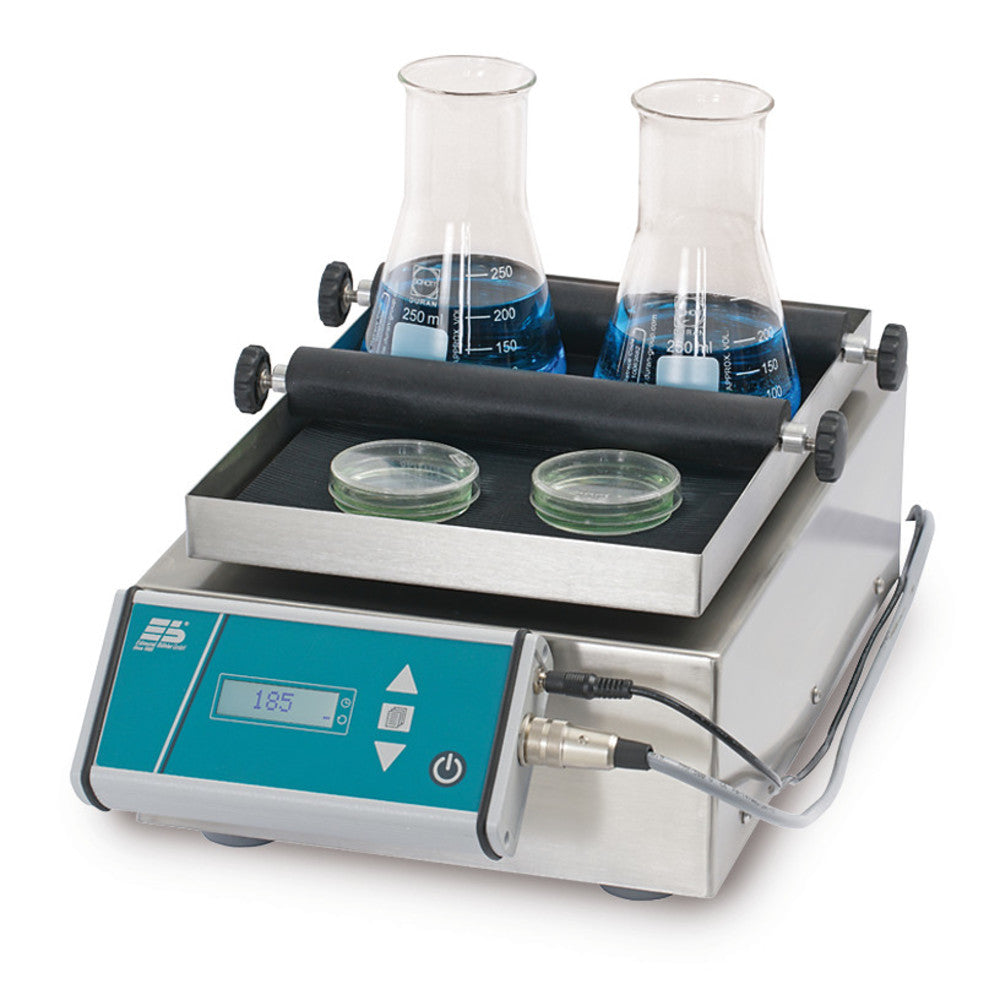
KM CO2 orbital shakers are CO2-resistant laboratory shakers designed for orbital mixing in controlled atmospheres. The unit operates over an orbital speed range of 30–220/min and is supplied as one complete system including an external control unit, standard cable, and a basic attachment with rubber mat. CO2-resistant construction supports use inside CO2 incubators or related environments where standard shakers may not be suitable. Pack presentation is 1 pc with a unit weight of 9,400 kg, reflecting a robust benchtop appliance for continuous laboratory duty. From manufacturer Edmund Bühler, the KM CO2 model addresses cell-culture, microbiology, and life-science workflows that require gentle to moderate orbital agitation under elevated carbon dioxide. The included basic attachment with rubber mat provides a ready platform for common vessels, while the external control unit keeps operation accessible outside the chamber. Research groups and core facilities can integrate this shaker into incubator-based protocols without inventing additional hardware claims beyond the stated configuration. Speed adjustability from 30 to 220 per minute covers typical mixing needs for culture flasks and similar labware.
This article is part of Shakers, rockers & rotators, in Stirring, shaking & mixing.
Key features
- Pack size: 1 pc
- Product type: CO2-resistant orbital shaker
- Model: KM CO2
- Motion: Orbital
- Speed range: 30–220/min
- Scope of delivery: Ext. control unit, standard cable, basic attachment with rubber mat
Recently viewed
You may also like
Browse related categories
Category
Sub-category
Catalogue
Brand
Questions about KM CO2 orbital shakers, CO2-resistant, orbital, 30-220/min, 1 unit(s)
What is this article?
KM CO2 orbital shakers, CO2-resistant, orbital, 30-220/min, 1 unit(s) is the article on this page. Luminix Health distributes Edmund Bühler for laboratory use. It sits in Shakers, rockers & rotators, inside Stirring, shaking & mixing, in Lab instruments.
A shaker, rocker or rotator moves a rack, a plate or a bottle so the contents keep moving without a stirrer bar. Orbital, reciprocating and rocking motions are different. The platform, the load and the speed range are the specification.
Stirring keeps a mixture uniform or helps a solid dissolve. A magnetic stirrer spins a bar inside a closed vessel. An overhead stirrer drives a shaft when the liquid is viscous or the volume is large. A vortex mixer agitates a tube. A shaker moves a whole rack or a plate. The shape of the impeller and the speed decide whether the liquid turns over or merely spins. The vessels being stirred are indexed under ISO laboratory glassware.
Which category should I open next?
The category is Stirring, shaking & mixing. The sub-category is Shakers, rockers & rotators. The catalogue is Lab instruments.
Shelves beside this one are Magnetic stirring bars, Stirring shafts, propellers & impellers, Magnetic stirrers, Stirring & mixing accessories, Homogenisers & dispersers, Overhead stirrers and Vortex mixers.
What should I check before I order?
The technical information on this page is the manufacturer's sheet. Read that, not a rewritten specification.
When this page shows a safety data sheet, use that manufacturer file. Hazard text does not belong in the sales description. For a pack size, a grade or a certificate that is not on the page, send a quote request or contact the team.
How does ordering and shipping work?
Luminix Health distributes this article from the heart of Europe. Articles in stock ship within 2–5 business days. Standard delivery is free from €250 excl. VAT. Cold-chain goods and dangerous goods under ADR are never included in that free delivery. The terms are in the Shipping Policy. The full brand index is on shop by brand. Who we are is on about us.
Which other categories should I open?
The seven catalogues are Labware, Lab chemicals, Lab instruments, Lab consumables, Chromatography equipment, Lab safety equipment and Life Science & Microbiology.