
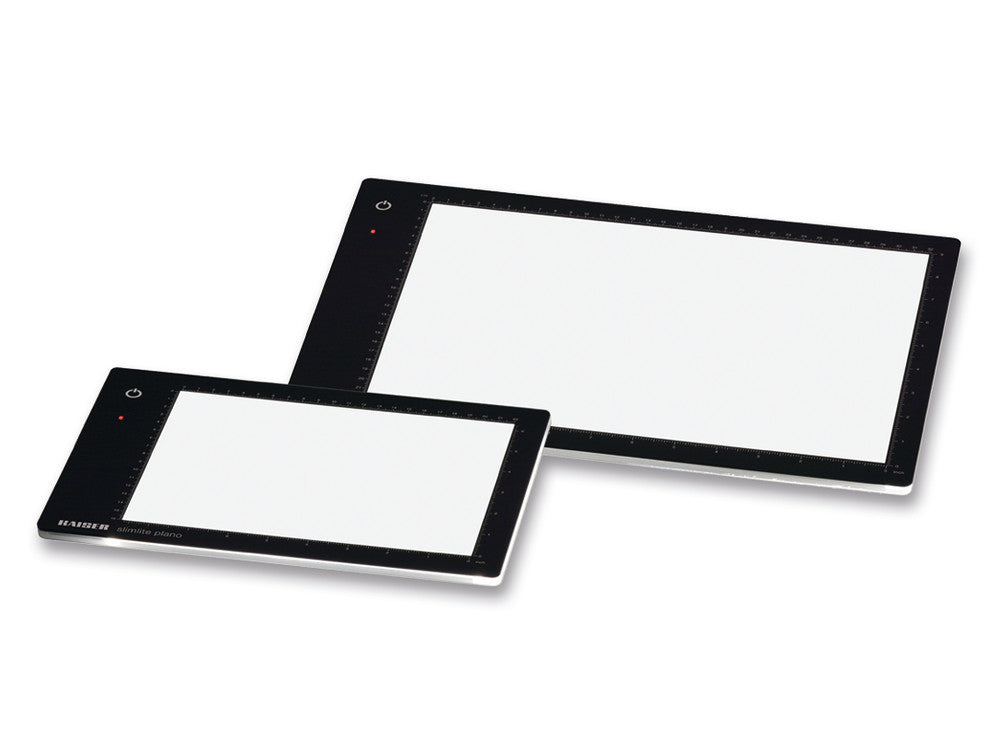


Description
LED light panel slimlite plano Type L is a laboratory LED light panel offering an illuminated area of 429x309 and 90 LEDs. This larger slimlite plano model supports lighting applications in the laboratory where a broader illuminated field is useful for inspection, observation, or bench-based optical work. The unit is supplied as 1 pc and has a weight of 1,800 kg. It contains lithium-ion cells and carries UN number 3481; according to the stated data it does not require labeling under SV 188, ADR. Available from manufacturer ROTH SELECTION, the Type L slimlite plano panel belongs to the light-panels assortment within optical instruments and lamps for labware. The combination of 90 LEDs and the 429x309 illuminated area defines this large-format panel for laboratory lighting layouts that need extended coverage. Integrate the panel into workflows that rely on LED illumination for sample assessment, documentation, or related optical tasks. All described attributes follow the given Type L configuration, LED count, illuminated area, pack presentation, weight, and lithium-ion transport classification.
This article is part of Cold light sources & lighting, in Microscopy & histology.
Key features
- Pack size: 1 pc
- Product: LED light panel slimlite plano
- Type: L
- Illuminated area: 429x309
- LED count: 90 LEDs
- Weight: 1,800 kg
- Technical Information Sheet:

Recently viewed
You may also like
Browse related categories
Category
Sub-category
Catalogue
Brand
Questions about LED light panel slimlite plano, Type L, illuminated area 429x309, 90LEDs
What is this article?
LED light panel slimlite plano, Type L, illuminated area 429x309, 90LEDs is the article on this page. Luminix Health distributes Carl Roth for laboratory use. It sits in Cold light sources & lighting, inside Microscopy & histology, in Lab instruments.
A cold light keeps the heat of the lamp away from a living or a melting specimen, usually by a fibre light guide. It is the illuminator for a stereo microscope. Colour temperature matters when the image is photographed. A hot lamp over a dissection dries the sample.
A light microscope forms an image with glass lenses and transmitted or reflected light. A stereo microscope is the lower-magnification instrument for dissecting and for looking at a surface. Fluorescence needs a light source and filters matched to the dye. Histology is the preparation that makes a tissue readable: fixation, a cassette, a section, a stain. The objective's magnification and numerical aperture decide the resolution. The slide and the cover glass decide whether the section sits in the focal plane. Stains and dyes as substances are identified on PubChem. Papers on the methods are on PubMed.
Which category should I open next?
The category is Microscopy & histology. The sub-category is Cold light sources & lighting. The catalogue is Lab instruments.
Shelves beside this one are Microscope slides & cover glasses, Microscope objectives, eyepieces & optics, Histology cassettes & moulds, Counting chambers & haemocytometers, Stereo microscopes, Light & fluorescence microscopes, Histology reagents & consumables, Microscopy accessories and Digital & USB microscopes.
What should I check before I order?
The technical information on this page is the manufacturer's sheet. Read that, not a rewritten specification.
When this page shows a safety data sheet, use that manufacturer file. Hazard text does not belong in the sales description. For a pack size, a grade or a certificate that is not on the page, send a quote request or contact the team.
How does ordering and shipping work?
Luminix Health distributes this article from the heart of Europe. Articles in stock ship within 2–5 business days. Standard delivery is free from €250 excl. VAT. Cold-chain goods and dangerous goods under ADR are never included in that free delivery. The terms are in the Shipping Policy. The full brand index is on shop by brand. Who we are is on about us.
Which other categories should I open?
The seven catalogues are Labware, Lab chemicals, Lab instruments, Lab consumables, Chromatography equipment, Lab safety equipment and Life Science & Microbiology.