Description
Pyrocatechol is an aromatic dihydroxybenzene reagent supplied at min. 99 % purity for biochemistry applications. Identified by CAS number 120-80-9 and empirical formula C₆H₆O₂, it has a molar mass of 110,11 g/mol and a density in the range 1,34 to 1,37 g/cm³. The boiling point is 245,5 °C and the flash point is 127 °C, supporting controlled handling in the laboratory. This grade is intended for biochemical work where a defined catechol structure is required as a starting material, intermediate, or analytical reference. The material is offered in a 25 g glass pack from manufacturer Carl ROTH, providing a convenient quantity for method development and routine bench use. With EG number 204-427-5 and UN number 2811, the product is clearly documented for laboratory inventory and transport classification. Pyrocatechol’s compact solid form and well-characterised physical data make it a practical choice for research and quality-control workflows that rely on consistent catechol chemistry.
This article is part of Biochemicals (other), in Biochemicals & reagents.
Key features
- Assay (GC, area %): ≥99 %
- Melting range: 103-105 °C
- CAS number: 120-80-9
- Pack size: 25 g glass
- EG nr.: 204-427-5
- Purity: min. 99 %
- Empirical formula: C₆H₆O₂
- Molar mass: 110,11 g/mol
- Technical Information Sheet:

- Safety Data Sheet:
Compliance & Safety Information
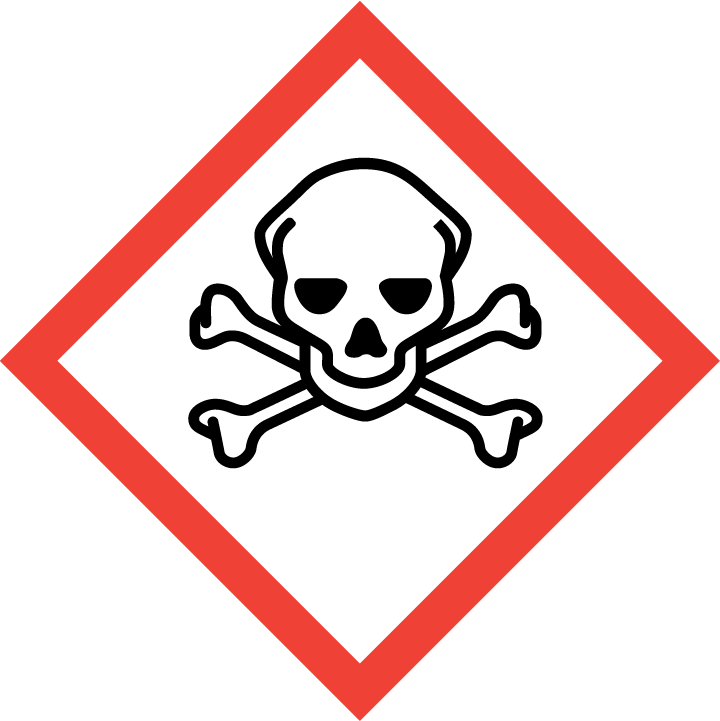
 Danger
Hazard Statements (H-Phrases)
Precautionary Statements (P-Phrases)


Recently viewed
You may also like
Browse related categories
Category
Sub-category
Catalogue
Brand
Questions about Pyrocatechol, min. 99 %, for biochemistry, 25 g, glass
What is this article?
Pyrocatechol, min. 99 %, for biochemistry, 25 g, glass is the article on this page. Luminix Health distributes Carl Roth for laboratory use. It sits in Biochemicals (other), inside Biochemicals & reagents, in Microbiology lab supplies.
These are the biochemical reagents that are not an amino acid, a sugar, a lipid, an enzyme or an antibiotic. Identity and purity still decide the bottle. If the compound is light-sensitive or hygroscopic, the handling on the label is part of the specification.
A biochemical is a molecule of life, sold as a reagent: an amino acid, a sugar, a nucleotide, a lipid, an enzyme, an antibiotic. The difference from a bulk chemical is that the use is a biological one, and the impurities that matter are the ones that change that use. An enzyme is specified by activity, not only by mass. An antibiotic is specified by potency. Papers are on PubMed. Structures are on PubChem. Strains and lines that consume these reagents are at ATCC.
Which category should I open next?
The category is Biochemicals & reagents. The sub-category is Biochemicals (other). The catalogue is Microbiology lab supplies.
Shelves beside this one are Amino acids & peptides, Carbohydrates & sugars, Coenzymes, nucleotides & vitamins, Enzymes & substrates, Antibiotics & antimycotics, Lipids, steroids & fatty acids and Detergents & surfactants.
What should I check before I order?
When this page shows a safety data sheet, use that manufacturer file. Hazard text does not belong in the sales description. For a pack size, a grade or a certificate that is not on the page, send a quote request or contact the team.
How does ordering and shipping work?
We deliver across the EU, usually within 2 to 5 working days. More is on Delivery across the EU. The terms are in the Shipping Policy. The full brand index is on shop by brand. Who we are is on about us.
Which other categories should I open?
The seven catalogues are Labware, Lab chemicals, Lab instruments, Lab consumables, Chromatography equipment, Lab safety equipment and Life Science & Microbiology.