


Description
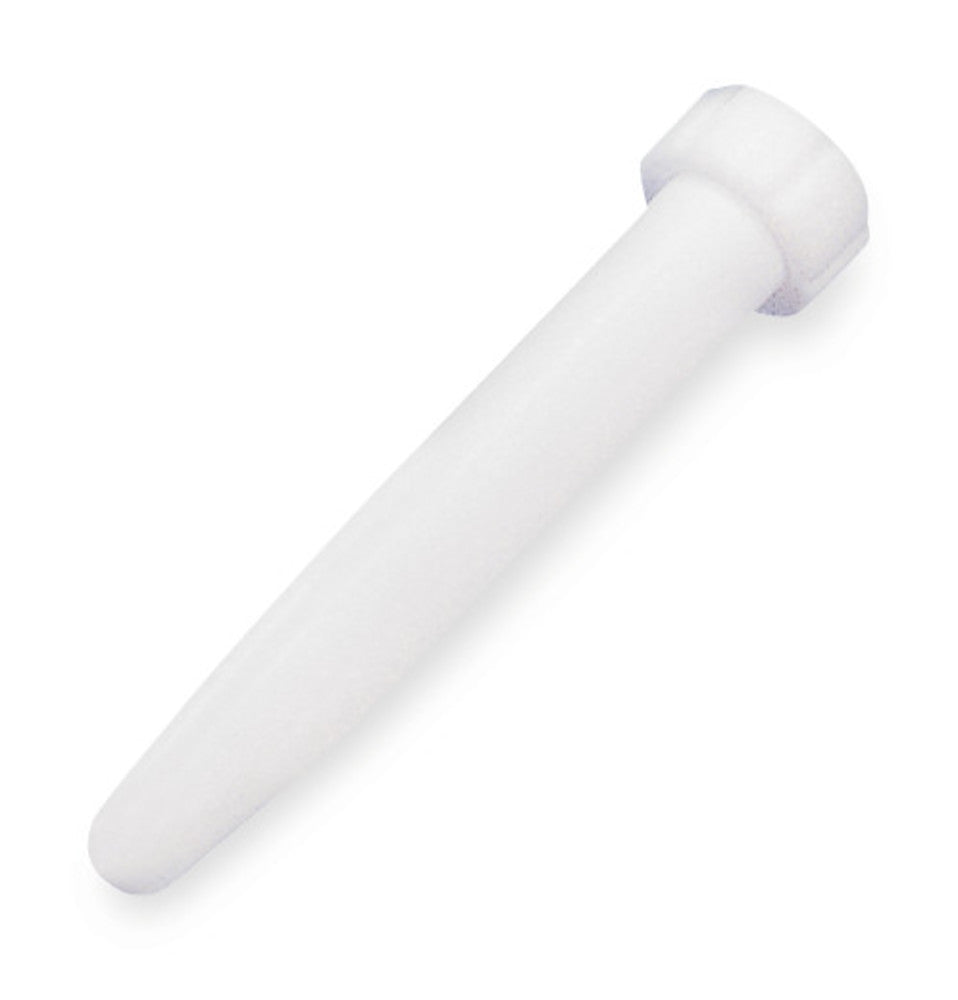
Rotilabo® centrifuge tube made of PTFE is an inert laboratory vessel for centrifugation and sample handling where chemical resistance matters. Constructed from polytetrafluoroethylene, the tube includes a screw-cap closure, a conical bottom, and a nominal capacity of 18 ml. PTFE delivers broad chemical inertness, supporting use with aggressive reagents and workflows in which glass or conventional plastics may be less suitable. The screw cap helps maintain secure containment during spinning, transport, and interim storage. Provided as a single piece weighing 0,024 kg, this item belongs to the Rotilabo® range from manufacturer ROTH SELECTION and is grouped with centrifuge tubes for everyday laboratory needs. Conical-bottom geometry is commonly preferred when tight pellets or clear supernatant separation are central to the protocol. Research, analytical, and quality-control laboratories can deploy the tube for sample preparation, extraction procedures, and general centrifugation involving corrosive or reactive media. The single-unit pack size is convenient for individual experiments and for keeping chemically resistant plasticware available at the bench.
This article is part of Centrifuge tubes (conical), in Tubes & vials.
Key features
- Pack size: 1 pc
- Material: PTFE
- Capacity: 18 ml
- Bottom shape: Conical bottom
- Closure: Screw cap
- Property: Inert
Recently viewed
You may also like
Browse related categories
Category
Sub-category
Catalogue
Brand
Questions about Rotilabo®-centrifuge tube made of PTFE, screw cap, inert, conical bottom, 18ml
What is this article?
Rotilabo®-centrifuge tube made of PTFE, screw cap, inert, conical bottom, 18ml is the article on this page. Luminix Health distributes Carl Roth for laboratory use. It sits in Centrifuge tubes (conical), inside Tubes & vials, in Labware.
A centrifuge tube is conical so a pellet collects at the tip, and it is rated for a relative centrifugal force. A 15 mL tube and a 50 mL tube are different rotors. Polypropylene is the ordinary plastic. The cap has to survive the same force as the tube.
A tube holds a small sample upright. A test tube is the open glass or plastic cylinder. A centrifuge tube is conical so a pellet forms at the tip, and it is rated for a centrifugal force the rotor will actually reach. A vial is a small closed bottle, often for a sample that will sit in an instrument. NMR tubes are a special case: the glass has to be uniform or the spectrum is the tube, not the sample. Laboratory ware is listed under ISO laboratory glassware.
Which category should I open next?
The category is Tubes & vials. The sub-category is Centrifuge tubes (conical). The catalogue is Labware.
Shelves beside this one are Test tubes, Sample vials & NMR tubes and Tube & vial accessories.
What should I check before I order?
The technical information on this page is the manufacturer's sheet. Read that, not a rewritten specification.
When this page shows a safety data sheet, use that manufacturer file. Hazard text does not belong in the sales description. For a pack size, a grade or a certificate that is not on the page, send a quote request or contact the team.
How does ordering and shipping work?
Luminix Health distributes this article from the heart of Europe. Articles in stock ship within 2–5 business days. Standard delivery is free from €250 excl. VAT. Cold-chain goods and dangerous goods under ADR are never included in that free delivery. The terms are in the Shipping Policy. The full brand index is on shop by brand. Who we are is on about us.
Which other categories should I open?
The seven catalogues are Labware, Lab chemicals, Lab instruments, Lab consumables, Chromatography equipment, Lab safety equipment and Life Science & Microbiology.