


Description
Formaldehyde solution 35 % is an aqueous fixative grade preparation with a minimum content of 35 %. DAB, intended for histology and related cell-analysis workflows. Identified by CAS number 50-00-0 and empirical formula CH₂O, it has a molar mass of 30,03 g/mol and a density of 1,09 g/cm³. The boiling range is 93 to 96 °C and the flash point is 62 °C, supporting controlled handling in laboratory fixation protocols. Its defined concentration and physical data allow reproducible preparation of fixative baths and working dilutions. The product carries EG number 200-001-8 and UN number 2209. Laboratories use this formaldehyde solution where consistent DAB-grade material is required for histological fixation, specimen stabilisation, and subsequent staining or microscopic examination of cellular structures.
This article is part of Histology reagents & consumables, in Microscopy & histology.
Key features
- Appearance: clear to turbid, colourless liquid
- Assay: 35.0-37.5 %
- Methanol: 8.0-12.0 %
- Formic acid: ≤0.03 %
- Sulphated ash: ≤0.1 %
- CAS number: 50-00-0
- Pack sizes: 1 l, 5 l, 30 l, 10 l, 2.5 l
- EG nr.: 200-001-8
- Purity: min. 35 % DAB
- Molar mass: 30,03 g/mol
- Density: 1,09 g/cm³
- Technical Information Sheet:

- Safety Data Sheet:
Compliance & Safety Information
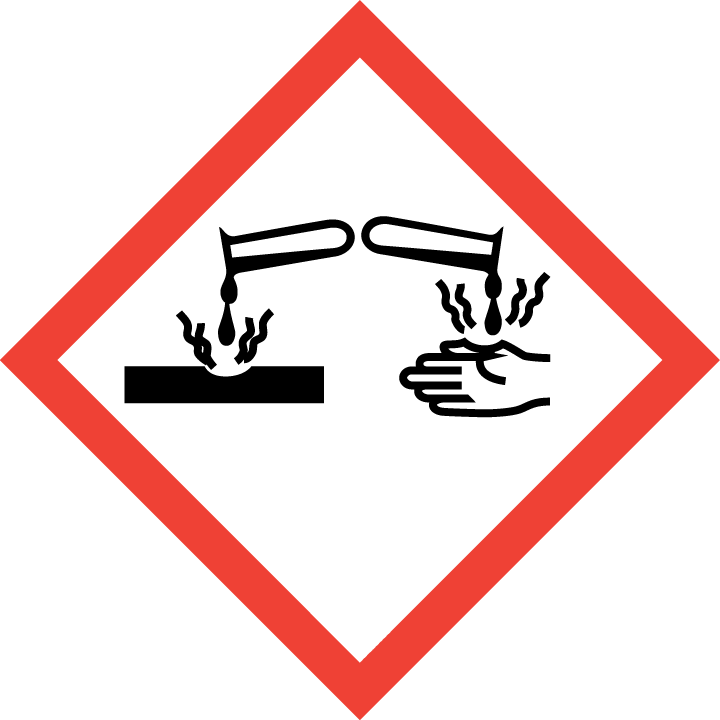
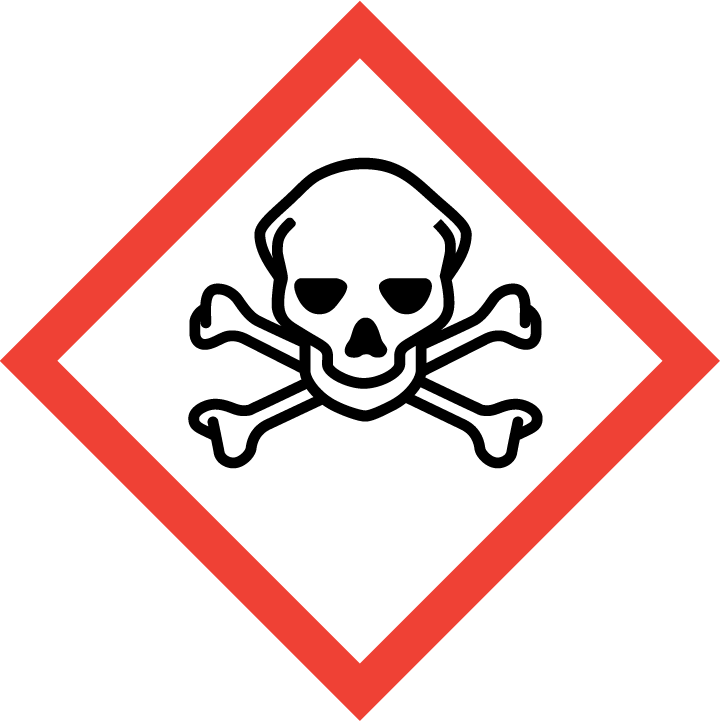
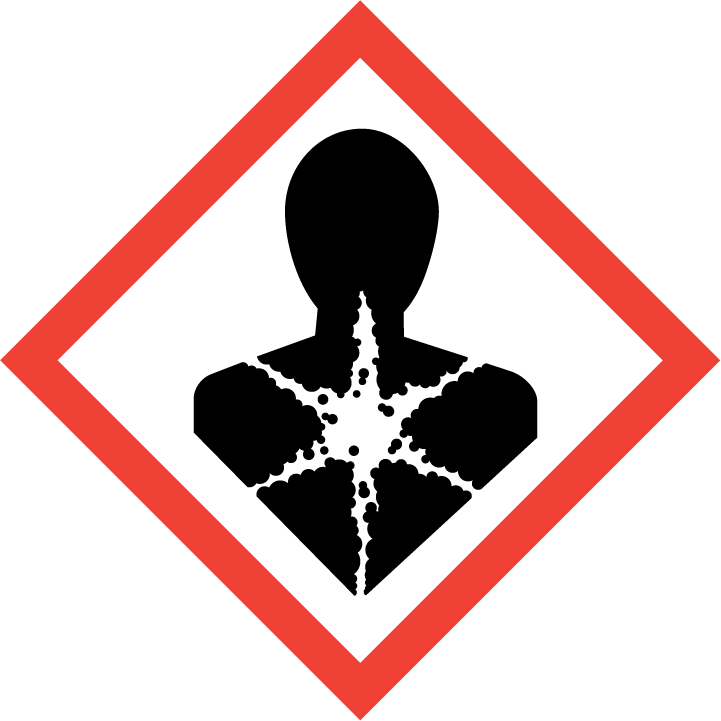 Danger
Hazard Statements (H-Phrases)
Precautionary Statements (P-Phrases)
Recently viewed
You may also like
Questions about Formaldehyde solution 35 %, min. 35 % DAB, for histology, 1 l, plastic
What is this article?
Formaldehyde solution 35 %, min. 35 % DAB, for histology, 1 l, plastic is the article on this page. Luminix Health distributes Carl Roth for laboratory use. It sits in Histology reagents & consumables, inside Microscopy & histology, in Lab instruments.
Histology reagents are the fixatives, the solvents, the paraffins and the stains that turn a tissue into a readable section. The stain and the tissue, not the bottle size alone, choose the reagent. Many of these liquids are flammable or toxic and travel under dangerous-goods rules.
A light microscope forms an image with glass lenses and transmitted or reflected light. A stereo microscope is the lower-magnification instrument for dissecting and for looking at a surface. Fluorescence needs a light source and filters matched to the dye. Histology is the preparation that makes a tissue readable: fixation, a cassette, a section, a stain. The objective's magnification and numerical aperture decide the resolution. The slide and the cover glass decide whether the section sits in the focal plane. Stains and dyes as substances are identified on PubChem. Papers on the methods are on PubMed.
Which category should I open next?
The category is Microscopy & histology. The sub-category is Histology reagents & consumables. The catalogue is Lab instruments.
Shelves beside this one are Microscope slides & cover glasses, Microscope objectives, eyepieces & optics, Histology cassettes & moulds, Counting chambers & haemocytometers, Stereo microscopes, Light & fluorescence microscopes, Microscopy accessories, Cold light sources & lighting and Digital & USB microscopes.
What should I check before I order?
The technical information on this page is the manufacturer's sheet. Read that, not a rewritten specification.
When this page shows a safety data sheet, use that manufacturer file. Hazard text does not belong in the sales description. For a pack size, a grade or a certificate that is not on the page, send a quote request or contact the team.
How does ordering and shipping work?
We deliver across the EU, usually within two to five working days. More is on Delivery across the EU. The terms are in the Shipping Policy. The full brand index is on shop by brand. Who we are is on about us.
Which other categories should I open?
The seven catalogues are Labware, Lab chemicals, Lab instruments, Lab consumables, Chromatography equipment, Lab safety equipment and Life Science & Microbiology.

