Description
Rhodamine B solution is a ready-to-use indicator preparation containing 0,5 % Rhodamine B dissolved in 2-propanol. With the empirical formula C₂₈H₃₁ClN₂O₃ and a molar mass of 479,02 g/mol, it is suited to titration workflows and pH indicator applications in analytical and quality-control laboratories. The solution exhibits a density of 0,786 g/cm³, a boiling point of 82 °C and a flash point of 13 °C, and is classified under UN number 1219. Supplied in a 100 ml glass pack, this convenient format supports routine indicator work without additional preparation steps. The product is offered by manufacturer Carl ROTH within its range of ready-to-use pH indicator solutions for titration. Laboratories can integrate it into acid–base and related volumetric procedures where a stable alcoholic Rhodamine B reagent is required. Clear physical data and a defined solvent matrix help maintain consistency across batches and support reproducible endpoint observation in everyday analytical practice.
This article is part of Fluorescent dyes & labels, in Dyes, stains & indicators.
Key features
- Pack size: 100 ml glass
- Empirical formula: C₂₈H₃₁ClN₂O₃
- Molar mass: 479,02 g/mol
- Density: 0,786 g/cm³
- Flash point: 13 °C
- CAS number: 67-63-0
- Technical Information Sheet:

- Safety Data Sheet:
Compliance & Safety Information
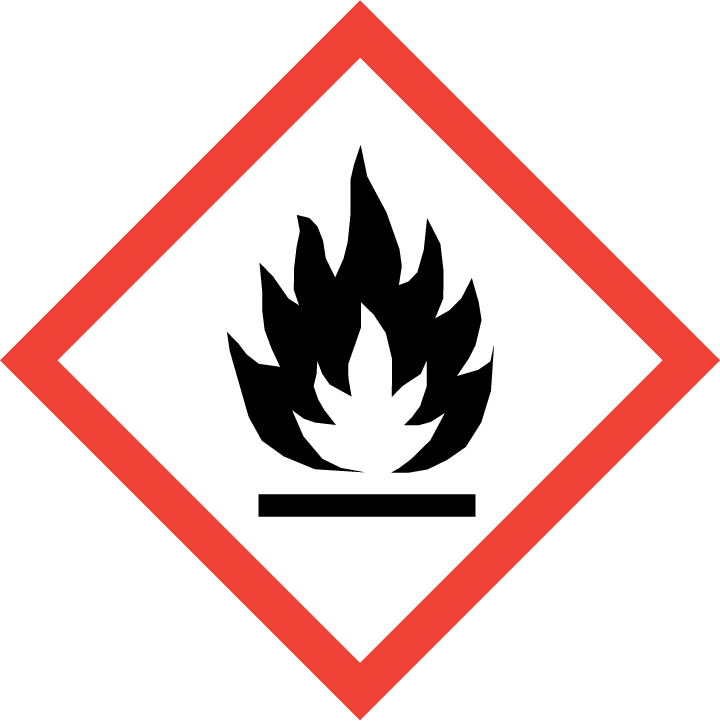
 Danger
Hazard Statements (H-Phrases)
Precautionary Statements (P-Phrases)


Recently viewed
You may also like
Browse related categories
Category
Sub-category
Catalogue
Brand
Questions about Rhodamine B solution, 0,5 % in 2-Propanol, 100 ml, glass
What is this article?
Rhodamine B solution, 0,5 % in 2-Propanol, 100 ml, glass is the article on this page. Luminix Health distributes Carl Roth for laboratory use. It sits in Fluorescent dyes & labels, inside Dyes, stains & indicators, in Lab chemicals.
A fluorescent dye absorbs at one wavelength and emits at a longer one. As a label it is attached to a protein, a nucleic acid or a cell. Excitation and emission maxima, and the reactive group if it must conjugate, are the specification. The colour name does not tell you the wavelengths.
A dye or a stain binds, or changes colour, so that something invisible becomes visible. An indicator changes at a pH or a redox point. A fluorescent dye absorbs one wavelength and emits another, which is how a microscope or a plate reader picks it out. The excitation and emission, or the transition interval, are the specification. The colour name on the label is not. Structures are on PubChem under IUPAC names. Methods are in the PubMed literature.
Which category should I open next?
The category is Dyes, stains & indicators. The sub-category is Fluorescent dyes & labels. The catalogue is Lab chemicals.
Shelves beside this one are Microscopy stains & staining solutions and Dyes & pigments.
What should I check before I order?
The technical information on this page is the manufacturer's sheet. Read that, not a rewritten specification.
When this page shows a safety data sheet, use that manufacturer file. Hazard text does not belong in the sales description. For a pack size, a grade or a certificate that is not on the page, send a quote request or contact the team.
How does ordering and shipping work?
We deliver across the EU, usually within 2 to 5 working days. More is on Delivery across the EU. The terms are in the Shipping Policy. The full brand index is on shop by brand. Who we are is on about us.
Which other categories should I open?
The seven catalogues are Labware, Lab chemicals, Lab instruments, Lab consumables, Chromatography equipment, Lab safety equipment and Life Science & Microbiology.