


Description
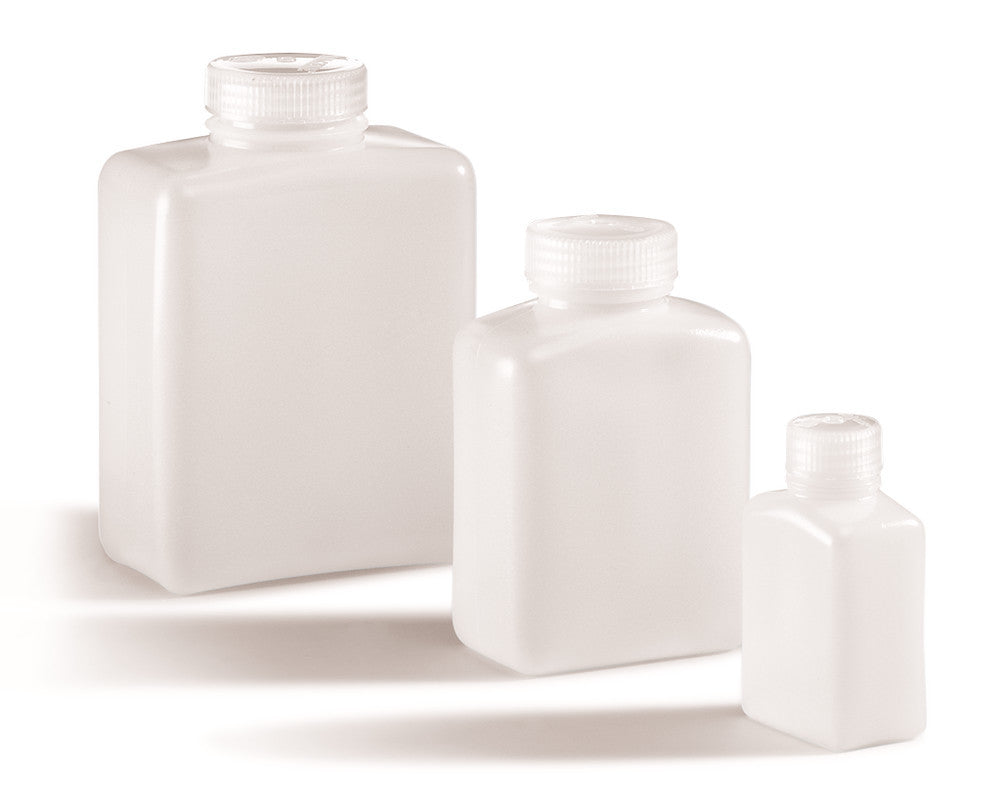
Rechthoekige flessen met wijde hals van HDPE bieden een lekvrije inhoud van 2000 ml voor grotere laboratoriumvolumes en het verwerken van bulkvloeistoffen. De wijde hals vereenvoudigt het vullen en reinigen, terwijl het rechthoekige profiel de schapdichtheid en stabiele stapeling maximaliseert in vergelijking met ronde houders van vergelijkbaar volume. De constructie van hogedichtheidpolyethyleen ondersteunt dagelijks gebruik met waterige reagentia, buffers en procesoplossingen die veel voorkomen in onderzoeks- en industriële laboratoria. De lekvrije prestaties helpen monsters en werkoppervlakken te beschermen tijdens verplaatsing tussen voorbereidingsruimten, opslag- en analysestations. Aangeboden per vier stuks van fabrikant Nalgene, is het formaat geschikt voor middelgrote bevoorrading zonder overtollige voorraad. De verpakking weegt 1,290 kg, wat een genereus volume in balans brengt met een hanteerbaar gewicht. Deze plastic flessen passen op natuurlijke wijze in reeksen laboratoriumbenodigdheden voor houders en kannen waar betrouwbare, ruimtebesparende opslag van grotere aliquots vereist is bij kwaliteitscontrole, productieondersteuning en algemene laboratoriumwerkzaamheden.
Dit artikel hoort bij Plastic flessen (smalle & wijde hals), in Flessen & houders.
Belangrijkste kenmerken
- Verpakkingsgrootte: 4 stuks
- Materiaal: HDPE
- Inhoud: 2000 ml
- Ontwerp: Wijde hals, rechthoekig
- Eigenschap: Lekvrij
- Gewicht: 1,290 kg
Récemment consulté
Vous aimerez peut-être aussi
Browse related categories
Category
Sub-category
Plastic bottles (narrow & wide mouth)
Catalogue
Brand
Questions about Rechthoekige flessen met wijde hals, HDPE, lekvrij, 2000 ml, 4 stuks
What is this article?
Rechthoekige flessen met wijde hals, HDPE, lekvrij, 2000 ml, 4 stuks is the article on this page. Luminix Health distributes Nalgene for laboratory use. It sits in Plastic bottles (narrow & wide mouth), inside Bottles & containers, in Matériel de laboratoire.
A plastic bottle is polyethylene, polypropylene or a fluoropolymer, narrow-mouth for pouring or wide-mouth for powders. It is the choice when the bottle must not shatter, and it is the wrong choice for solvents that swell the plastic.
A laboratory bottle is a closed container with a stated volume and a neck that takes a cap, a stopper or a dispenser. Borosilicate glass is the choice when the liquid is a solvent, or when the bottle will be heated or autoclaved. Polyethylene and polypropylene are the choice when the bottle must not shatter, or when hydrofluoric acid would attack glass. A narrow mouth pours. A wide mouth is for powders and for reaching the bottom. Laboratory ware of this kind is indexed under ISO laboratory glassware. Traceable volume sits with the BIPM and NIST Physical Measurement.
Which category should I open next?
The category is Bottles & containers. The sub-category is Plastic bottles (narrow & wide mouth). The catalogue is Matériel de laboratoire.
Shelves beside this one are Laboratory glass bottles, Sample containers & jars, Canisters & jerrycans, Wash bottles and Bottle accessories (pouring rings, dispensers, caps).
What should I check before I order?
The technical information on this page is the manufacturer's sheet. Read that, not a rewritten specification.
When this page shows a safety data sheet, use that manufacturer file. Hazard text does not belong in the sales description. For a pack size, a grade or a certificate that is not on the page, send a quote request or contact the team.
How does ordering and shipping work?
Luminix Health distributes this article from the heart of Europe. Articles in stock ship within 2–5 business days. Standard delivery is free from €250 excl. VAT. Cold-chain goods and dangerous goods under ADR are never included in that free delivery. The terms are in the Shipping Policy. The full brand index is on shop by brand. Who we are is on about us.
Which other categories should I open?
The seven catalogues are Labware, Lab chemicals, Lab instruments, Lab consumables, Chromatography equipment, Lab safety equipment and Life Science & Microbiology.