


Description
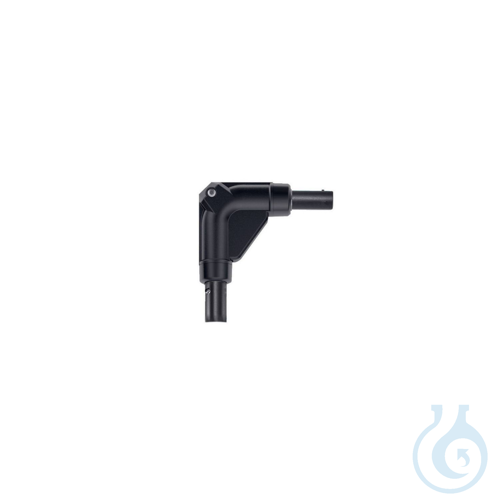
90° angle for connection of vane probes Ø100 mm is designed to position the matching vane probe correctly at ceiling outlets, enabling reliable airflow measurements in HVAC and laboratory environments. Ideal for work on high ceilings, it can be combined with an extendable telescope and a separately available telescope extension to reach a total telescope length of up to 2 metres. If you already use a flow probe with universal handle and extendable telescope, the same telescope can be paired effortlessly with 100 mm vane probes that share the universal handle system—simply add this optional 90° angle for ceiling-outlet applications. Supplied as a single piece with a net weight of 0,5 kg, the accessory integrates cleanly into existing Testo probe setups without altering the core measuring instrument. The angled geometry keeps the vane probe in the proper orientation relative to the outlet, supporting consistent velocity readings where vertical access is limited. Compact packaging dimensions make it easy to store and transport alongside other flow-measurement components for on-site commissioning, balancing and verification tasks.
This article is part of Light & fluorescence microscopes, in Microscopy & histology.
Key features
- Pack size: 1 pc
- Product type: 90° angle connector
- Compatible probes: Vane probes Ø100 mm
- Telescope extension: Up to 2 m total length (optional)
- EAN: 4029547019265
- Technical Information Sheet:

Récemment consulté
Vous aimerez peut-être aussi
Questions about 90° angle for connecting vane probes, Ø100 mm
What is this article?
90° angle for connecting vane probes, Ø100 mm is the article on this page. Luminix Health distributes Testo for laboratory use. It sits in Light & fluorescence microscopes, inside Microscopy & histology, in Instruments de laboratoire.
A light microscope looks through a thin specimen. A fluorescence microscope adds a light source and filters matched to a dye, so only the labelled structure shows. The filter set has to match the dye's excitation and emission. A bright-field microscope without those filters cannot do that experiment.
A light microscope forms an image with glass lenses and transmitted or reflected light. A stereo microscope is the lower-magnification instrument for dissecting and for looking at a surface. Fluorescence needs a light source and filters matched to the dye. Histology is the preparation that makes a tissue readable: fixation, a cassette, a section, a stain. The objective's magnification and numerical aperture decide the resolution. The slide and the cover glass decide whether the section sits in the focal plane. Stains and dyes as substances are identified on PubChem. Papers on the methods are on PubMed.
Which category should I open next?
The category is Microscopy & histology. The sub-category is Light & fluorescence microscopes. The catalogue is Instruments de laboratoire.
Shelves beside this one are Microscope slides & cover glasses, Microscope objectives, eyepieces & optics, Histology cassettes & moulds, Counting chambers & haemocytometers, Stereo microscopes, Histology reagents & consumables, Microscopy accessories, Cold light sources & lighting and Digital & USB microscopes.
What should I check before I order?
When this page shows a safety data sheet, use that manufacturer file. Hazard text does not belong in the sales description. For a pack size, a grade or a certificate that is not on the page, send a quote request or contact the team.
How does ordering and shipping work?
Luminix Health distributes this article from the heart of Europe. Articles in stock ship within 2–5 business days. Standard delivery is free from €250 excl. VAT. Cold-chain goods and dangerous goods under ADR are never included in that free delivery. The terms are in the Shipping Policy. The full brand index is on shop by brand. Who we are is on about us.
Which other categories should I open?
The seven catalogues are Labware, Lab chemicals, Lab instruments, Lab consumables, Chromatography equipment, Lab safety equipment and Life Science & Microbiology.