




Description
Buffer PW1 is a laboratory wash buffer supplied in a 1000 ml bottle for workflows that require Wash Buffer PW1. This larger pack supports extended washing steps in biochromatography and general laboratory purification procedures where a dedicated PW1 buffer is specified. The product is based on a 2-propanol solution and is classified for transport as UN 1993, flammable liquid, n.o.s. (2-propanol solution), packing group III. Associated hazard information includes the signal word Attention, statements H226, H302, H315, H319 and H336, and GHS labelling GHS02 and GHS07. With a net weight of 1,24 kg, the 1000 ml bottle from manufacturer Macherey-Nagel suits higher-throughput benches and shared reagent stations. Laboratory staff should observe flammable-liquid precautions, including adequate ventilation and control of ignition sources, in line with the safety data. The ready bottle format simplifies dispensing and helps maintain consistent wash conditions across repeated sample-preparation runs that call for Buffer PW1.
This article is part of Buffers (other), in Buffers & pH solutions.
Key features
- Pack size: 1000 ml bottle
- Storage temperature: 18–25 °C
- Product type: Wash buffer PW1
- Composition: 2-propanol solution
- EAN: 4046681156205
- Technical Information Sheet:

- Safety Data Sheet:
Compliance & Safety Information
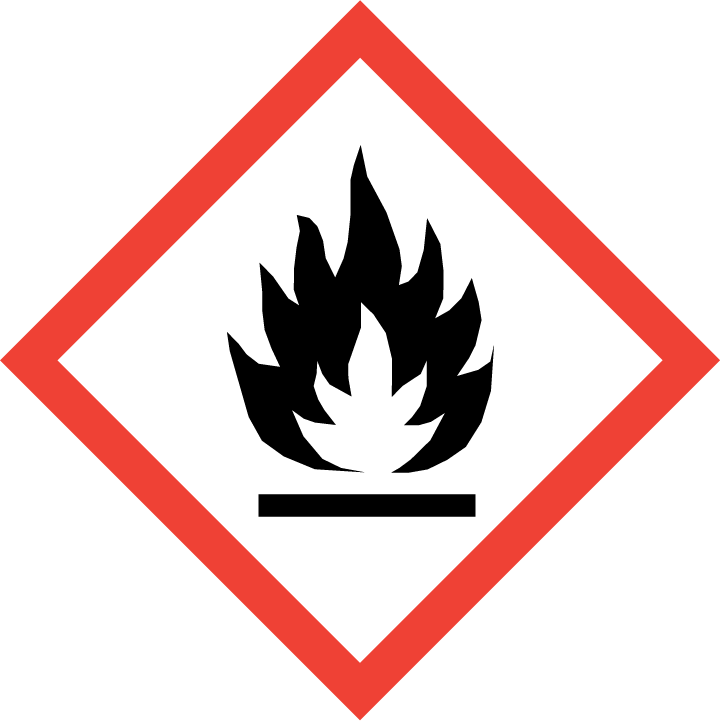
 Warning
Hazard Statements (H-Phrases)
Precautionary Statements (P-Phrases)
Recently viewed
You may also like
Browse related categories
Category
Sub-category
Catalogue
Brand
Questions about Buffer PW1 (1000 mL)
What is this article?
Buffer PW1 (1000 mL) is the article on this page. Luminix Health distributes Macherey-Nagel for laboratory use. It sits in Buffers (other), inside Buffers & pH solutions, in Lab chemicals.
These are buffer solutions and salts that are not a pH calibration standard and not a named biological buffer. The pH, the concentration and the identity of the ions are the specification. A buffer has a capacity. Diluted too far, it is only salty water.
A buffer resists a change in pH when a little acid or base is added. It does that because a weak acid and its conjugate base are both present. A pH buffer used to calibrate a meter has a stated value at a stated temperature. A biological buffer such as Tris or HEPES is chosen because it holds the pH of a living system and does not poison it. Conductivity standards are the sister articles for a conductivity meter. The ions are on PubChem. Electrode calibration practice sits with EURAMET and BELAC.
Which category should I open next?
The category is Buffers & pH solutions. The sub-category is Buffers (other). The catalogue is Lab chemicals.
Shelves beside this one are pH buffers & conductivity standards and Biological buffers (Tris, HEPES, MOPS).
What should I check before I order?
When this page shows a safety data sheet, use that manufacturer file. Hazard text does not belong in the sales description. For a pack size, a grade or a certificate that is not on the page, send a quote request or contact the team.
How does ordering and shipping work?
We deliver across the EU, usually within two to five working days. More is on Delivery across the EU. The terms are in the Shipping Policy. The full brand index is on shop by brand. Who we are is on about us.
Which other categories should I open?
The seven catalogues are Labware, Lab chemicals, Lab instruments, Lab consumables, Chromatography equipment, Lab safety equipment and Life Science & Microbiology.

