Description
Dichloromethane ROTIDRY®Sept is a dry solvent grade with minimum purity 99,9 % and maximum water content of 50 ppm H₂O, stabilised with amylene and supplied in a 250 ml pack. It is identified by CAS number 75-09-2 and EG number 200-838-9, with empirical formula CH₂Cl₂ and molar mass 84,93 g/mol. The liquid shows a density of 1,33 g/cm³ and a boiling point of 40 °C, parameters that guide extraction, reaction media choice and concentration steps in organic and analytical laboratories. Low residual water supports moisture-sensitive procedures, while amylene stabilisation addresses typical handling needs for dichloromethane. This offering from manufacturer Carl ROTH in the ROTIDRY®Sept series suits sample preparation, synthesis work-up and general laboratory solvent use where a defined dry grade is required. UN number 1593 applies for transport classification. Stated purity, water limit, stabiliser and core physicochemical data enable clear specification matching and inventory documentation without extending beyond the manufacturer’s published description.
This article is part of Dry & deuterated solvents (NMR, synthesis), in Solvents.
Key features
- Assay (GC): ≥99,9 %
- Colour (APHA): ≤10
- Water (KF): ≤0,005 %
- Acidity (as HCl): ≤0,001 %
- Evaporation residue: ≤0,001 %
- CAS number: 75-09-2
- Pack size: 250 ml
- EG nr.: 200-838-9
- Purity: min. 99,9 % (max. 50 ppm H₂O)
- Empirical formula: CH₂Cl₂
- Molar mass: 84,93 g/mol
- Technical Information Sheet:

- Safety Data Sheet:
Compliance & Safety Information

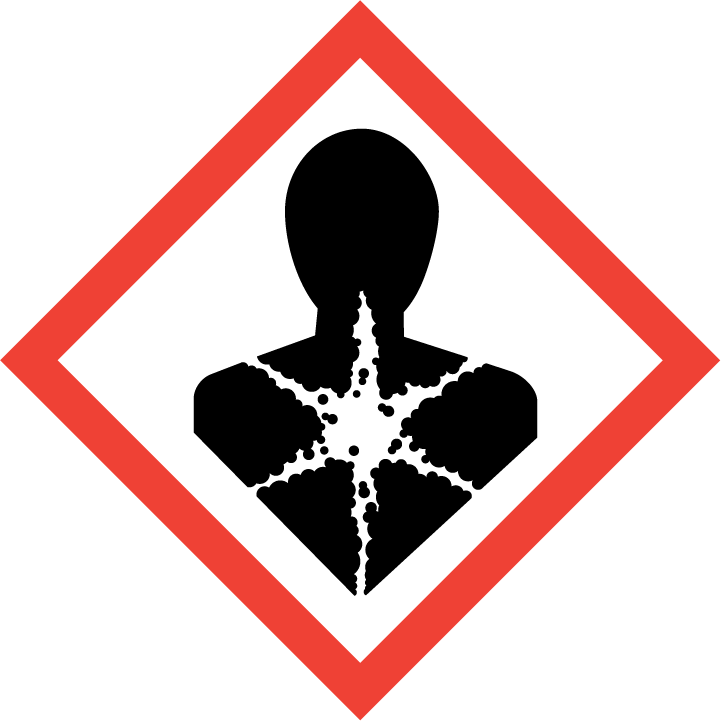 Warning
Hazard Statements (H-Phrases)
Precautionary Statements (P-Phrases)


Recently viewed
You may also like
Browse related categories
Category
Sub-category
Dry & deuterated solvents (NMR, synthesis)
Catalogue
Brand
Questions about Dichloromethane, ROTIDRY®Sept min. 99,9% (max. 50 ppm H2O), 250 ml
What is this article?
Dichloromethane, ROTIDRY®Sept min. 99,9% (max. 50 ppm H2O), 250 ml is the article on this page. Luminix Health distributes Carl Roth for laboratory use. It sits in Dry & deuterated solvents (NMR, synthesis), inside Solvents, in Lab chemicals.
A dry solvent has had water removed to a stated level, for a reaction that water would stop. A deuterated solvent replaces hydrogen with deuterium so an NMR spectrum is not drowned by the solvent signal. The isotopic enrichment and the water content are the two specifications. Caps and septa matter, because either product picks up moisture from the air.
A solvent dissolves. The grade says which impurities are low enough for the method. Analytical grade is the ordinary pure solvent. HPLC and LC-MS grades limit the absorbance and the ions that would become peaks or background. A dry solvent has had water removed. A deuterated solvent is for NMR, where the hydrogen signal would otherwise drown the sample. Technical grade is for cleaning and for synthesis that does not need a chromatogram. Identity is on PubChem. Names follow IUPAC. Hazards follow ECHA, the CLP Regulation and REACH.
Which category should I open next?
The category is Solvents. The sub-category is Dry & deuterated solvents (NMR, synthesis). The catalogue is Lab chemicals.
Shelves beside this one are Analytical grade solvents (p.a.), HPLC & LC-MS grade solvents, Technical & synthesis grade solvents and Green & alternative solvents.
What should I check before I order?
When this page shows a safety data sheet, use that manufacturer file. Hazard text does not belong in the sales description. For a pack size, a grade or a certificate that is not on the page, send a quote request or contact the team.
How does ordering and shipping work?
We deliver across the EU, usually within 2 to 5 working days. More is on Delivery across the EU. The terms are in the Shipping Policy. The full brand index is on shop by brand. Who we are is on about us.
Which other categories should I open?
The seven catalogues are Labware, Lab chemicals, Lab instruments, Lab consumables, Chromatography equipment, Lab safety equipment and Life Science & Microbiology.