



Description
NANOCONTROL proficiency test metals is a round-robin kit designed for external quality control of multi-element metal determinations in the laboratory. The set consists of proficiency test solutions A, B and C for the determination of aluminium, cadmium, chromium, copper, iron, nickel, lead and zinc, allowing laboratories to assess accuracy and comparability for these metals under proficiency-testing conditions. Documentation and a certificate accompany the solutions so participation and outcomes can be documented within accredited or internal quality systems. Supplied as a 1-set package from manufacturer Macherey-Nagel, the kit is aimed at environmental, industrial and analytical laboratories that routinely measure Al, Cd, Cr, Cu, Fe, Ni, Pb and Zn. Should no current metals round-robin series be open when the order is placed, enrolment is noted for the next available date. This NANOCONTROL metals format provides a structured way to verify method performance across eight common metal analytes without sourcing separate control materials for each element.
This article is part of Nanomaterials & quantum dots, in Inorganic chemicals.
Key features
- Pack size: 1 set
- Product type: NANOCONTROL proficiency test metals
- Contents: Proficiency test solutions A, B and C
- Parameters: Al, Cd, Cr, Cu, Fe, Ni, Pb and Zn
- EAN: 4046681145612
- Technical Information Sheet:

- Safety Data Sheet:
Compliance & Safety Information
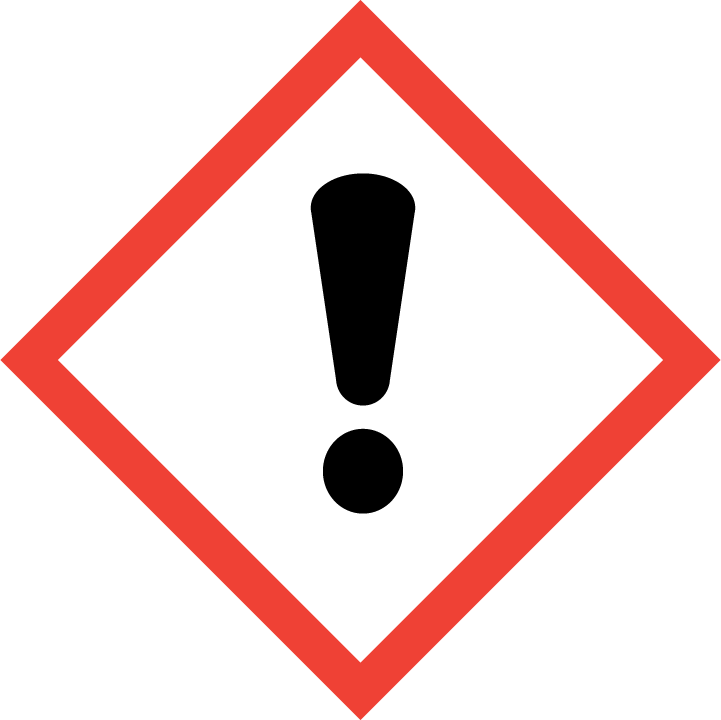 Warning
Hazard Statements (H-Phrases)
Precautionary Statements (P-Phrases)
Recently viewed
You may also like
Browse related categories
Category
Sub-category
Catalogue
Brand
Questions about NANOCONTROL Interlaboratory trial metals
What is this article?
NANOCONTROL Interlaboratory trial metals is the article on this page. Luminix Health distributes Macherey-Nagel for laboratory use. It sits in Nanomaterials & quantum dots, inside Inorganic chemicals, in Lab chemicals.
A nanomaterial is defined by a particle size that changes how it behaves. A quantum dot's optical emission depends on that size. The stated diameter, the surface coating and the concentration are the specification. The bulk powder of the same composition is not this product.
An inorganic chemical is a salt, an acid or base in solid form, a metal, an oxide, or an element. The waters of hydration are part of the formula: a hydrate and an anhydrous salt are different masses for the same ion. Trace metals matter when the salt will be used in analysis. Nanomaterials add particle size to the specification. Look the substance up on PubChem. Hazard classes are on ECHA, under the CLP Regulation and REACH. Transport of the dangerous ones is explained by the UNECE.
Which category should I open next?
The category is Inorganic chemicals. The sub-category is Nanomaterials & quantum dots. The catalogue is Lab chemicals.
Shelves beside this one are Inorganic salts and Metals, elements & oxides.
What should I check before I order?
When this page shows a safety data sheet, use that manufacturer file. Hazard text does not belong in the sales description. For a pack size, a grade or a certificate that is not on the page, send a quote request or contact the team.
How does ordering and shipping work?
We deliver across the EU, usually within 2 to 5 working days. More is on Delivery across the EU. The terms are in the Shipping Policy. The full brand index is on shop by brand. Who we are is on about us.
Which other categories should I open?
The seven catalogues are Labware, Lab chemicals, Lab instruments, Lab consumables, Chromatography equipment, Lab safety equipment and Life Science & Microbiology.

