


Description
SDS is a blotting-grade laboratory reagent of minimum 99 % purity with the empirical formula C₁₂H₂₅NaO₄S and CAS number 151-21-3. The molar mass is 288,38 g/mol, the flash point is 170 °C and the boiling point is 216 °C. This grade is directed at electrophoresis workflows, including horizontal agarose electrophoresis and the transfer of nucleic acids onto membranes in Southern blot and Northern blot procedures. SDS from manufacturer Carl ROTH is further identified by EG number 205-788-1 and UN number 1325. Laboratories employ this blotting-grade SDS in electrophoresis and membrane-transfer work where a minimum 99 % assay is required. is suited to routine Southern blot and Northern blot preparation as well as horizontal agarose electrophoresis. Molar mass 288,38 g/mol, flash point 170 °C and boiling point 216 °C complete the listed physical data, together with CAS 151-21-3 and formula C₁₂H₂₅NaO₄S.
This article is part of Detergents & surfactants, in Biochemicals & reagents.
Key features
- Appearance: white cryst. powder
- Assay (titr.): ≥99.3 %
- Water (KF): ≤1,0 %
- Solubility (10 % in H2O): clear, colourless
- Chloride (Cl): ≤0,025 %
- Heavy metals (as Pb): ≤0,0005 %
- 260 nm: ≤0,06
- 280 nm: ≤0,04
- CAS number: 151-21-3
- Pack sizes: 100 g, 250 g, 500 g
- EG nr.: 205-788-1
- Purity: min. 99 %
- Empirical formula: C₁₂H₂₅NaO₄S
- Molar mass: 288,38 g/mol
- Technical Information Sheet:

- Safety Data Sheet:
Compliance & Safety Information
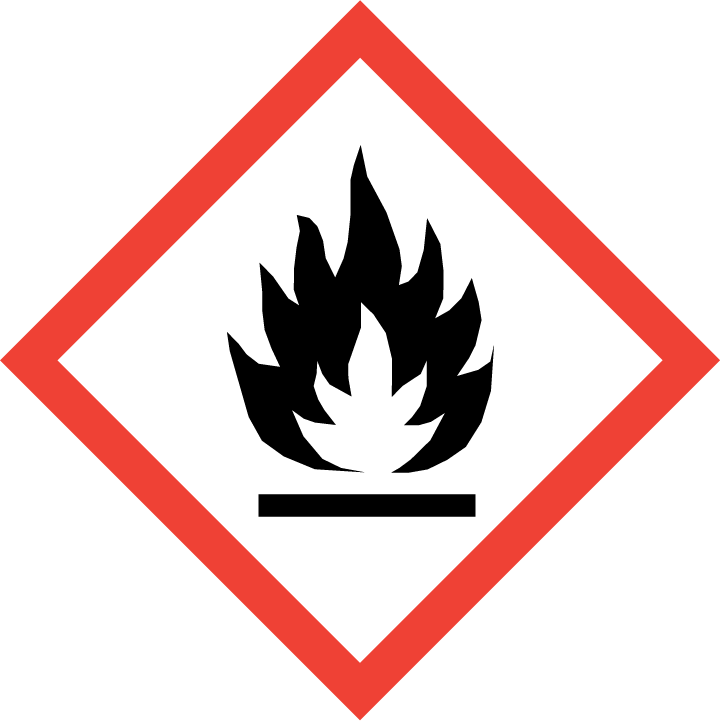

 Danger
Hazard Statements (H-Phrases)
Precautionary Statements (P-Phrases)


Recently viewed
You may also like
Browse related categories
Category
Sub-category
Catalogue
Brand
Questions about SDS, min. 99 %, Blotting-Grade, 100 g, plastic
What is this article?
SDS, min. 99 %, Blotting-Grade, 100 g, plastic is the article on this page. Luminix Health distributes Carl Roth for laboratory use. It sits in Detergents & surfactants, inside Biochemicals & reagents, in Microbiology lab supplies.
A laboratory detergent or surfactant, such as SDS, Tween or Triton, solubilises membranes and stops proteins sticking. The average chain length and the peroxide content matter, especially for a protein that a peroxide would damage. A cleaning detergent for glassware is a different product.
A biochemical is a molecule of life, sold as a reagent: an amino acid, a sugar, a nucleotide, a lipid, an enzyme, an antibiotic. The difference from a bulk chemical is that the use is a biological one, and the impurities that matter are the ones that change that use. An enzyme is specified by activity, not only by mass. An antibiotic is specified by potency. Papers are on PubMed. Structures are on PubChem. Strains and lines that consume these reagents are at ATCC.
Which category should I open next?
The category is Biochemicals & reagents. The sub-category is Detergents & surfactants. The catalogue is Microbiology lab supplies.
Shelves beside this one are Amino acids & peptides, Carbohydrates & sugars, Coenzymes, nucleotides & vitamins, Biochemicals (other), Enzymes & substrates, Antibiotics & antimycotics and Lipids, steroids & fatty acids.
What should I check before I order?
When this page shows a safety data sheet, use that manufacturer file. Hazard text does not belong in the sales description. For a pack size, a grade or a certificate that is not on the page, send a quote request or contact the team.
How does ordering and shipping work?
We deliver across the EU, usually within 2 to 5 working days. More is on Delivery across the EU. The terms are in the Shipping Policy. The full brand index is on shop by brand. Who we are is on about us.
Which other categories should I open?
The seven catalogues are Labware, Lab chemicals, Lab instruments, Lab consumables, Chromatography equipment, Lab safety equipment and Life Science & Microbiology.

